Your pool doesn't just stop working one day. It gives you signals — months or even years of them — before the surface truly fails. The problem is, most homeowners aren't sure which signs are cosmetic annoyances and which ones mean it's time to act.
After resurfacing hundreds of pools across Metro Atlanta, we can tell you: by the time most people call us, they've been looking at the warning signs for at least a season. Here's what to watch for — and why putting it off usually costs more than dealing with it now.
1. Rough or Sandpaper-Like Texture
Run your hand along the pool wall or floor. Fresh plaster feels smooth. A surface that's reaching the end of its life feels like fine sandpaper — and it gets rougher over time.
This roughness happens because the cement binder in your pool finish erodes over years of chemical exposure and water flow. As the smooth top layer wears away, the underlying aggregate or raw cement becomes exposed.
Why it matters beyond comfort: Rough surfaces aren't just unpleasant on feet and swimsuits. They harbor algae in microscopic crevices that your brush can't reach and chemicals can't fully penetrate. If you're fighting recurring algae blooms despite proper chemistry, a deteriorating surface is often the culprit.
What happens if you wait: The roughness accelerates. Algae problems get worse. Chemical costs go up because you're fighting the surface instead of maintaining it. And the rough texture starts eating through swimsuits and pool toys.
2. Stains That Won't Come Out
Every pool gets stains occasionally. A few leaves sit too long, metal content spikes, or algae gets a foothold. Normal stains respond to treatment — acid washing, enzyme treatments, or chemical adjustments.
The stains we're talking about are the ones that don't respond. You've tried everything. You've had your pool service treat them. They fade slightly and come right back, or they simply don't budge at all.
What's happening: When the pool surface becomes porous from age and wear, minerals and metals penetrate below the surface layer. No topical treatment can reach staining that's embedded in the material itself. It's like trying to clean a stain out of a sponge — the surface looks clean for a day, then the discoloration leaches back up.
Common culprits in Atlanta: Iron staining (brownish-red) from well water or corroding equipment, copper staining (blue-green) from heat exchanger erosion, and calcium scaling (white crusty deposits) from hard water — all common in Metro Atlanta's water supply.
What happens if you wait: The stains spread and deepen. Your pool starts looking dirty even when the water chemistry is perfect. And if mineral staining is the issue, the underlying cause (often deteriorating equipment) continues doing damage.
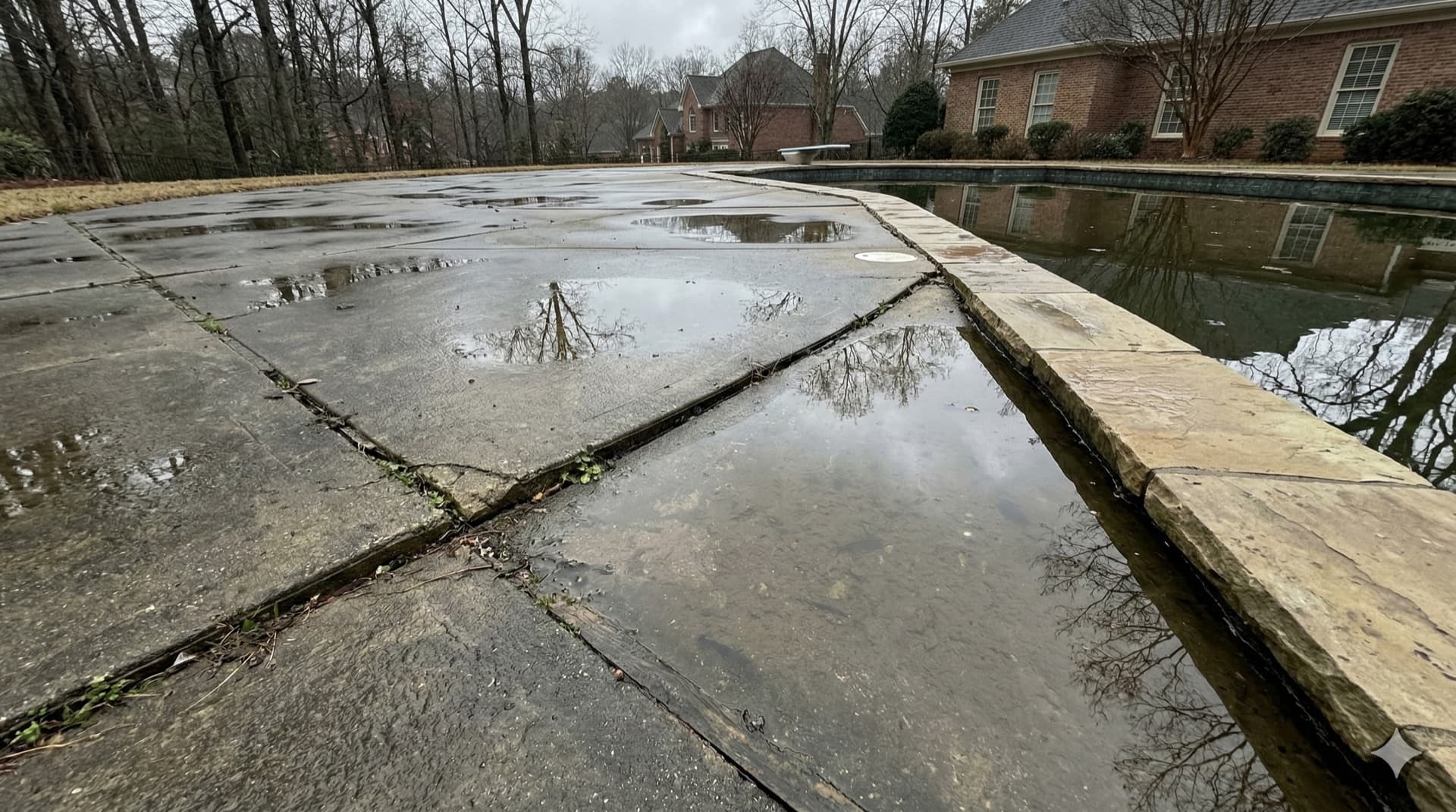
3. Visible Cracks or Delamination
Hairline surface cracks in plaster are relatively common and don't always mean you need immediate resurfacing. But there are two types of cracking that do:
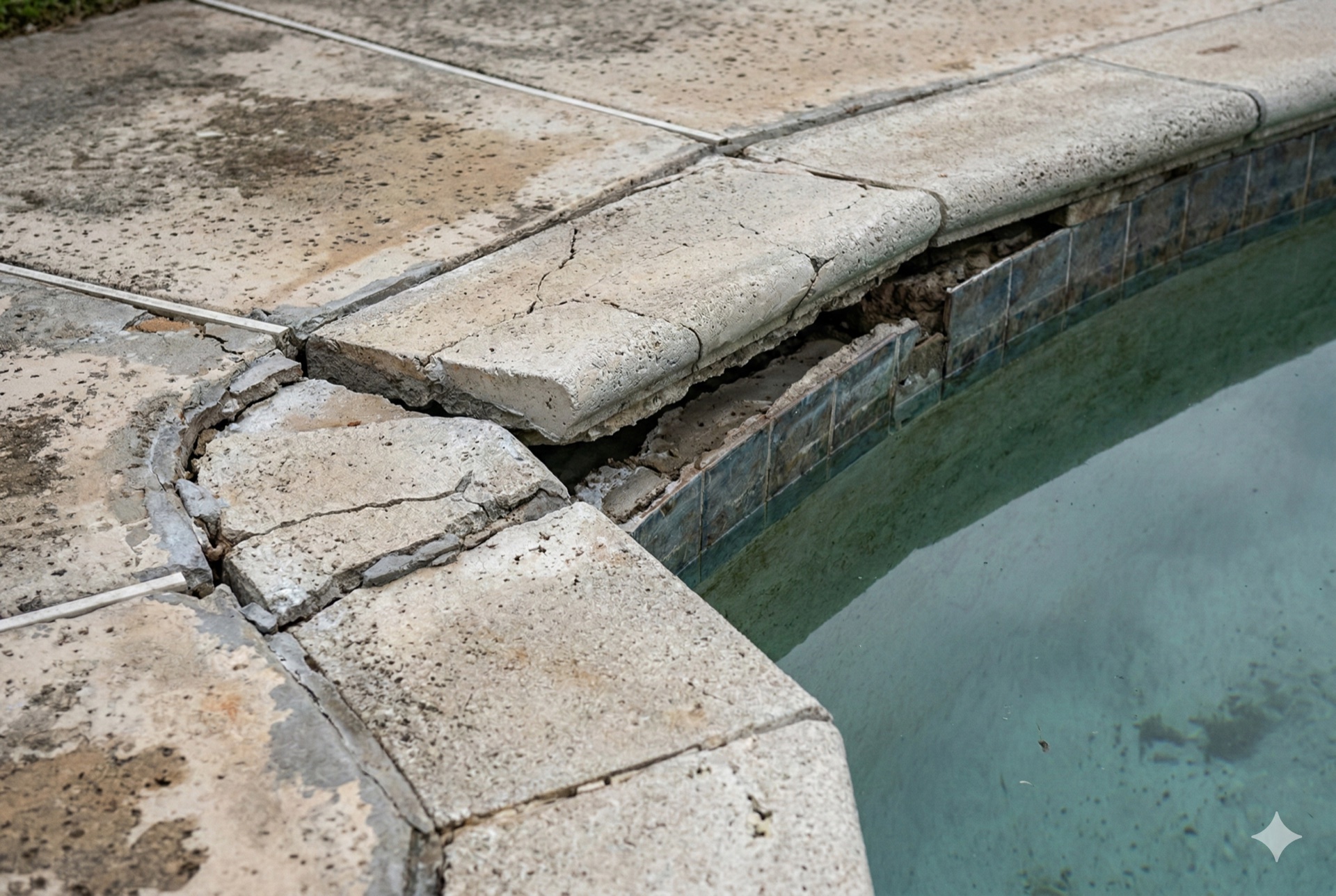
Structural-pattern cracking — a web or network of cracks that follows a pattern across a large area. This usually indicates the surface coat has lost bond with the shell underneath and is contracting independently. It's going to get worse.
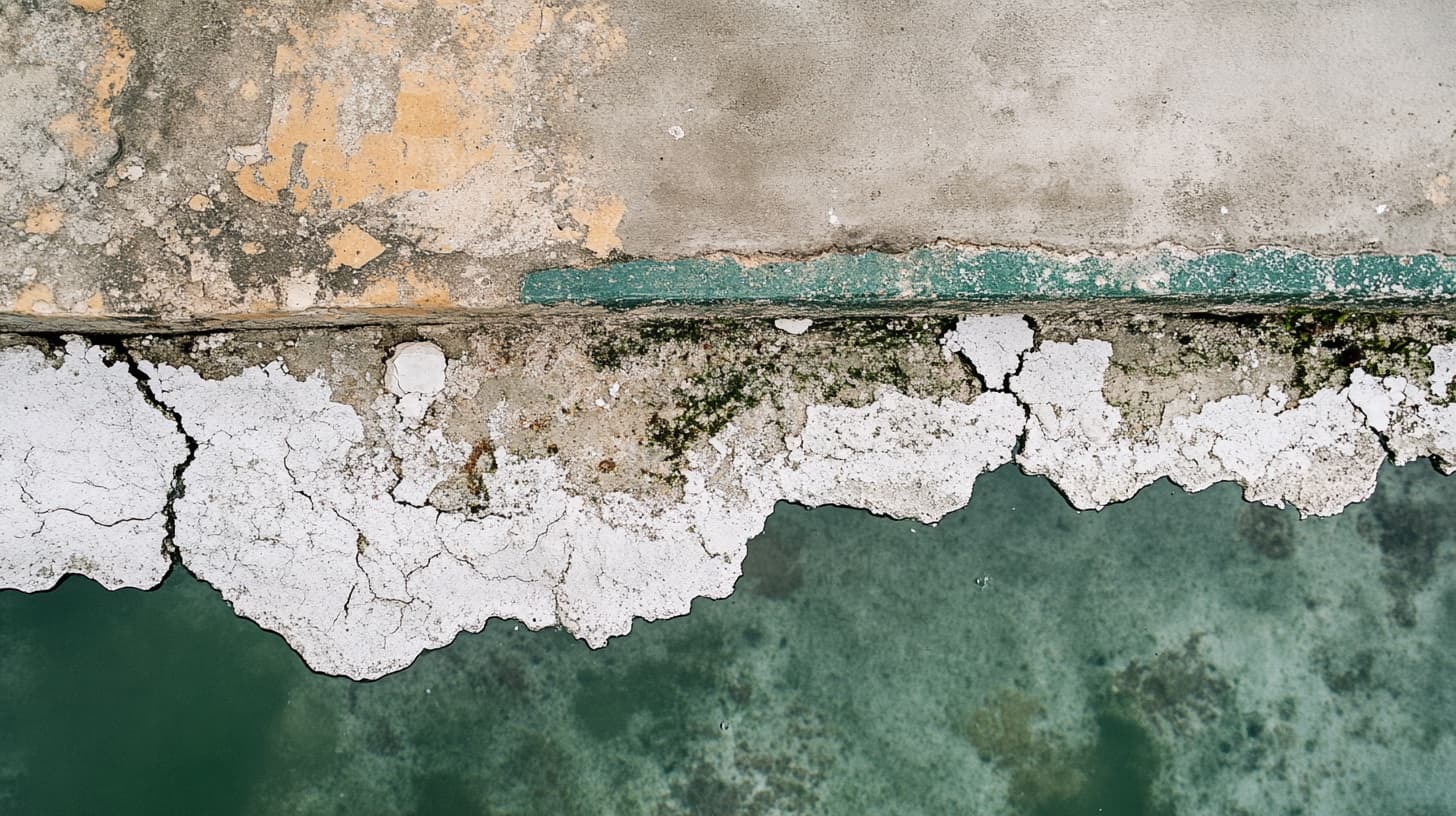
Delamination — where the surface layer is physically separating from the pool shell. You can sometimes see it as bubbling or hollow-sounding spots when you tap the wall. Chunks of surface material may break loose and collect in the pool.
What happens if you wait: Delamination is the one that escalates fastest. Once the bond breaks, water gets behind the finish and accelerates the separation. Small patches become large patches. Loose material clogs your filter and damages your pump impeller. What started as a resurfacing job can turn into a more extensive structural repair if water penetration compromises the pool shell or coping.
This played out on a pool in Dunwoody recently. The homeowner had noticed hollow spots on the deep-end wall two summers earlier but kept patching them with pool putty. By the time a contractor assessed it, the delamination had spread to about 40% of the wall, and the crumbling surface had worn grooves into the pump impeller. What would have been a $9,000 resurface turned into a $13,500 project with impeller replacement and more aggressive prep work. Two years of delay added roughly $4,500 to the bill.
4. Chalky Residue or Plaster Dust
If you run your hand along the pool wall and it comes away with a white chalky residue, your plaster is actively dissolving. This is called "plaster dust" or "calcium hydroxide leaching," and it means the surface is breaking down at a chemical level.
You might also notice this as a persistent cloudiness in the water that doesn't respond to filtration or chemical treatment. The pool surface itself is shedding material into the water.
Why this is more than cosmetic: Plaster dust changes your water chemistry constantly, making it nearly impossible to maintain proper balance. You'll chase pH and calcium hardness readings that won't stabilize. Your chemical costs go up, your filter works harder, and the surface deterioration accelerates because the unbalanced water attacks the finish even faster. It's a cycle.
What happens if you wait: Higher chemical bills, more filter cleanings, cloudier water, and an accelerating rate of surface loss. Some homeowners spend hundreds of extra dollars per season on chemicals trying to compensate for a failing surface — money that would be better applied toward the resurfacing itself.
5. Persistent Algae Despite Good Chemistry
This is the sign that frustrates homeowners the most. You're testing the water regularly. The chlorine is right. The pH is right. You're brushing. And algae keeps coming back.
Here's why: a deteriorated pool surface creates an environment where algae can establish in places chemicals can't fully reach. The microscopic pits, crevices, and rough patches in an aging finish are perfect algae habitats. You kill what's on the surface, but the colonies in the crevices re-establish within days.
If your pool service is shrugging and suggesting more shock treatments, the surface is probably the real problem.
What happens if you wait: You spend more on chemicals and labor fighting a battle you can't win. The algae issue gets progressively worse as the surface continues to deteriorate, creating more hospitable spots for growth.
The Real Cost of Waiting
We understand the impulse to delay. Resurfacing is a real investment — typically $5,000 to $15,000 depending on materials. But waiting almost always makes the project more expensive, not less:
Chemical costs add up. Fighting a failing surface can cost $500 to $1,000+ per year in excess chemicals. The National Plasterers Council estimates that pools with deteriorated surfaces require 30% to 50% more chemical input to maintain safe water chemistry.
Equipment damage. Plaster dust and debris from a deteriorating surface clogs filters faster and can damage pump impellers. Replacing a variable-speed pump is $1,500 to $2,500.
The surface gets worse, not better. A pool finish that needs resurfacing this year will need resurfacing and potentially additional repairs next year. Delamination spreads. Cracks grow. What's a straightforward resurface today might require structural work in two years.
Coping and tile damage. A failing pool surface often means the waterline tile and coping are deteriorating too. Catching everything together is more efficient than addressing it in stages.
What Does "Time to Resurface" Actually Mean?
If you're seeing one of these signs, that's worth keeping an eye on. If you're seeing two or three, it's time to start getting quotes. If you're seeing four or five, your pool is telling you clearly.
Most pool surfaces in Metro Atlanta — whether in Decatur, Dunwoody, or elsewhere — last 7 to 15 years depending on the original material and how well the water chemistry was maintained. If your pool is in that age range and you're nodding along to these signs, you're right on schedule. The good news: fall and winter are the ideal time to tackle it, and planning now means you're swimming in a renovated pool by next summer.
A Quick Self-Assessment
Here's a 60-second check you can do right now:
- Run your palm along the pool wall at water level. Smooth, slightly rough, or sandpaper?
- Look at any stains. Have you treated them and they came back?
- Tap the walls in a few spots. Any hollow sounds?
- Rub your hand on the wall — any white residue on your fingers?
- Have you been fighting algae despite good chemistry?
If you answered yes to two or more, it's worth getting a professional assessment. At Cornerstone Pool & Remodel, consultations are free and there's no obligation. We'll look at your surface, tell you what we see, and explain your options — including whether it's actually time to act or whether you can reasonably wait another season.
Reach out through our contact page or give us a call to schedule a visit.
Ready to Talk About Your Pool?
Get a free, no-obligation consultation from Cornerstone Pool & Remodel.
Request a Free Quote