The Largest Surface Around Your
Pool Deserves the Most Attention
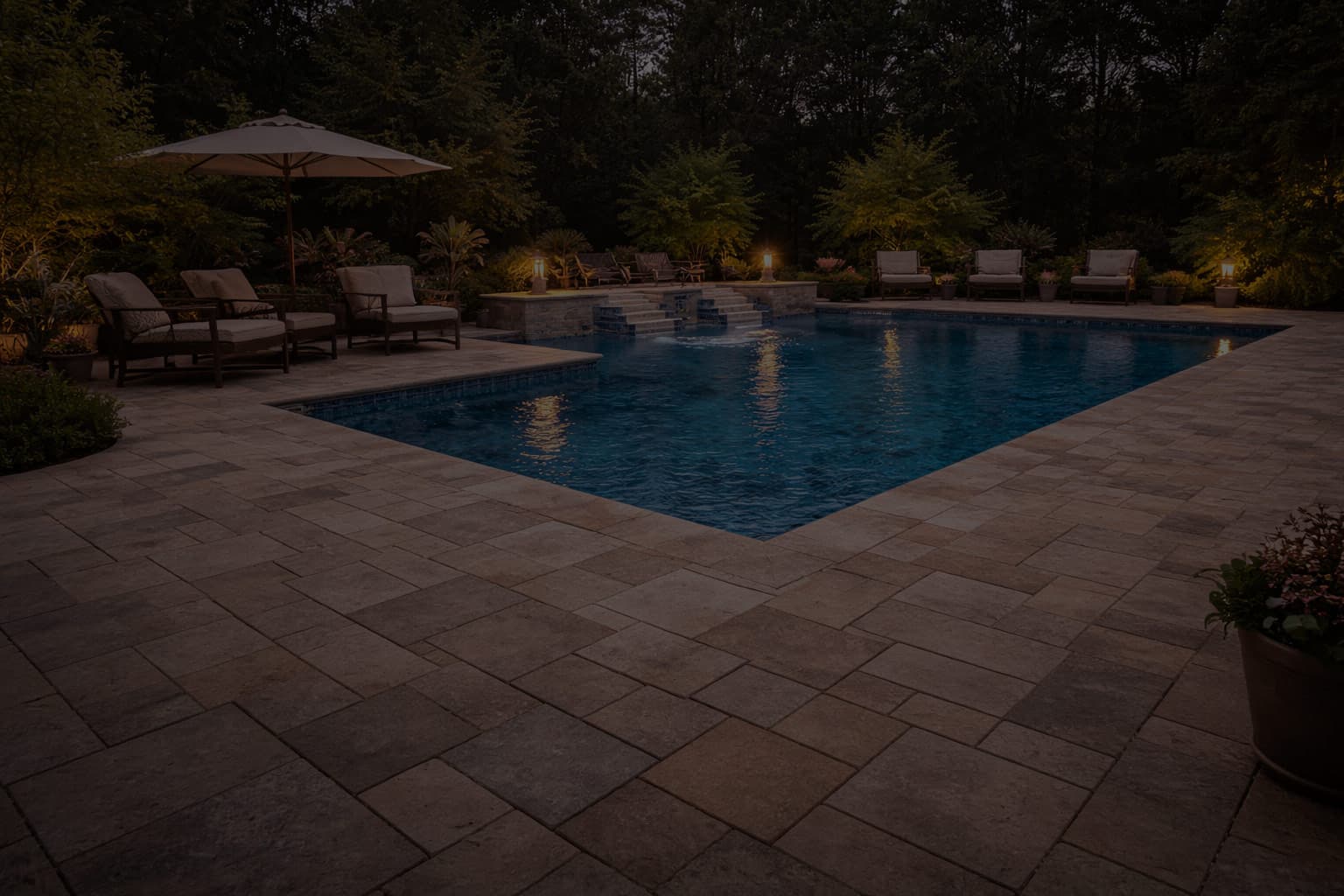
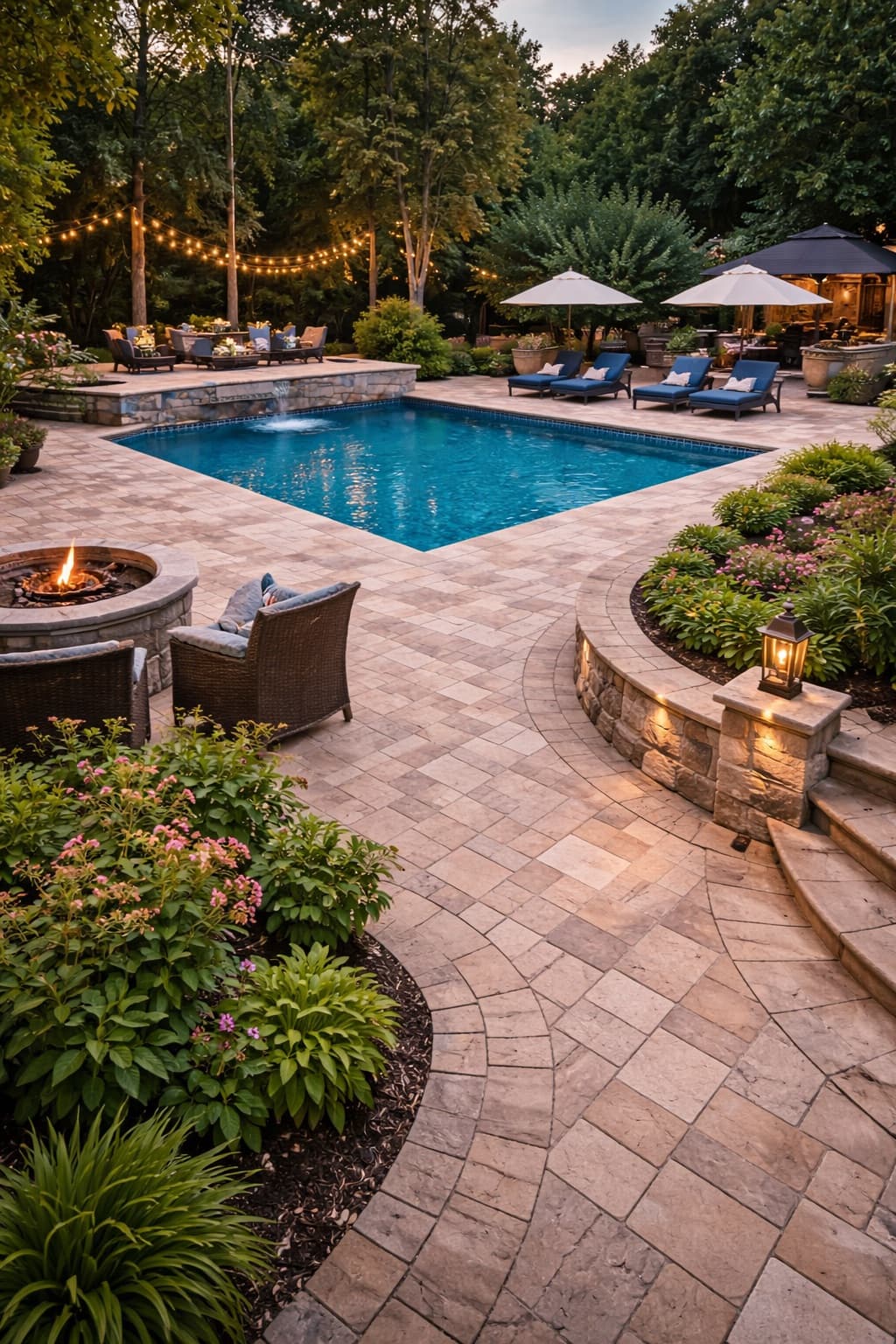
Your pool deck is the most used, most abused, and most visible hardscape surface in your backyard. It takes direct Georgia sun for eight months a year, standing water after every swim, furniture legs, bare feet, and the constant expansion and contraction that comes with Atlanta's swing from summer heat to winter freezes. When it starts to crack, settle, or look worn, it drags down everything around it — no matter how good the pool itself looks. We renovate pool decks across metro Atlanta with pavers, travertine, natural stone, stamped concrete, and modern resurfacing systems. Full tear-out or overlay. Immediate pool surround or the entire backyard hardscape. All of it installed by our own crew.
It's Not Just a Surface — It's the Foundation of the Entire Space
Most homeowners underestimate how much the pool deck affects the way their backyard looks and feels. The deck is the frame around the pool, the surface underfoot for everyone who uses the space, and the visual canvas that ties the pool to the rest of the landscape. When the deck is in good shape, the whole area feels finished and inviting. When it's cracked, uneven, stained, or faded, even a brand-new pool surface and fresh coping can't compensate.
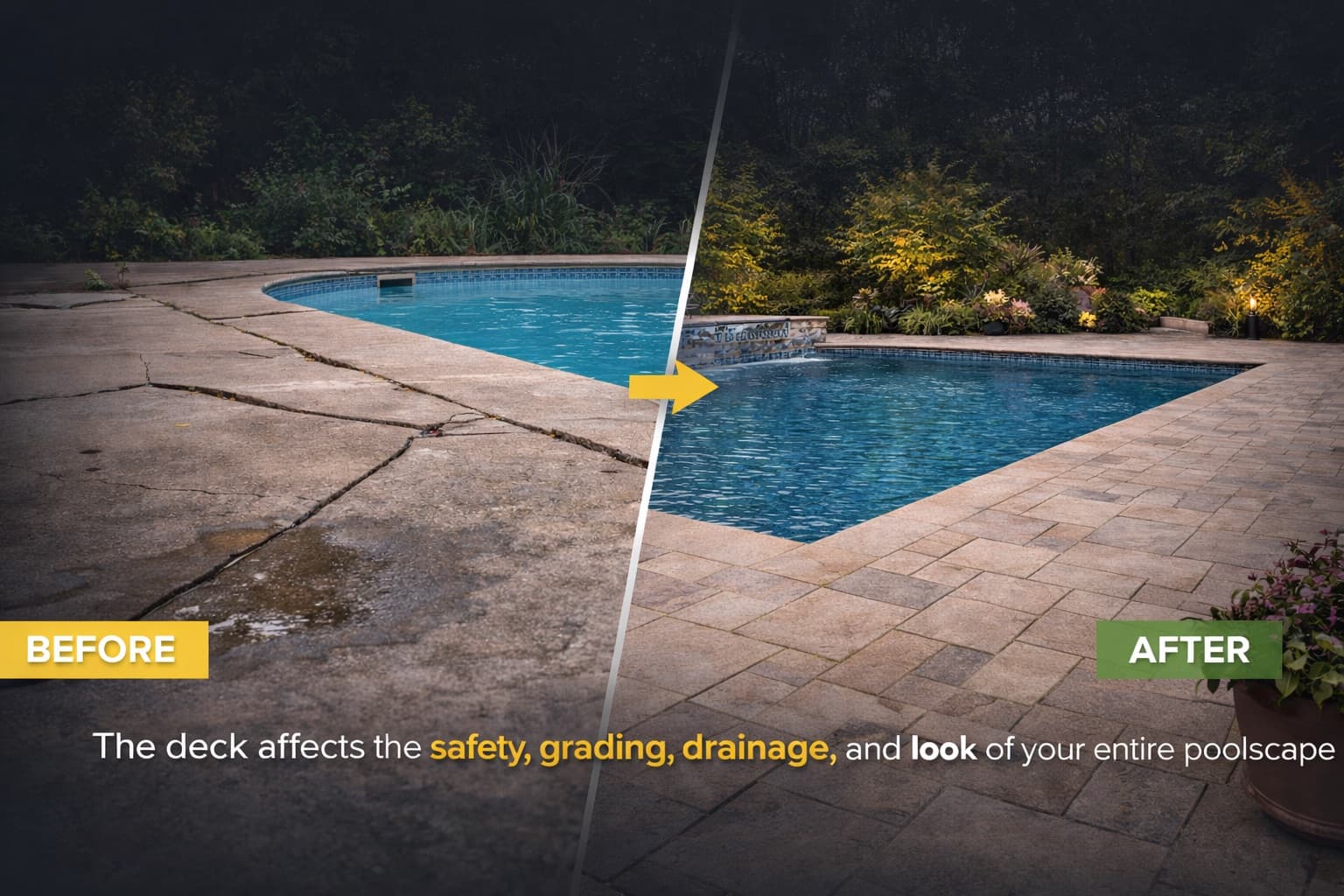
Beyond appearance, a failing pool deck creates real functional problems. Settled or heaved sections become trip hazards. Cracks let water penetrate the substrate, accelerating erosion underneath and making the problem worse with every rain and every freeze-thaw cycle. Poor drainage — often caused by settling or an original deck that was graded incorrectly — sends water toward the pool instead of away from it, which throws off water chemistry and introduces debris. And a deck surface that's lost its texture becomes dangerously slick when wet.
A pool deck renovation addresses all of this at once — the safety, the drainage, the structural integrity, and the look. Whether you need a full tear-out or a resurfacing overlay, the result is a surface that's level, properly graded, cool underfoot, and built to hold up to the way your family actually uses the space.
Full Replacement or Resurface
Over What's There
Not every deck renovation requires ripping everything out and starting from scratch — but some do. Here's how we determine which approach is right for your project.
Full Tear-Out & Replacement
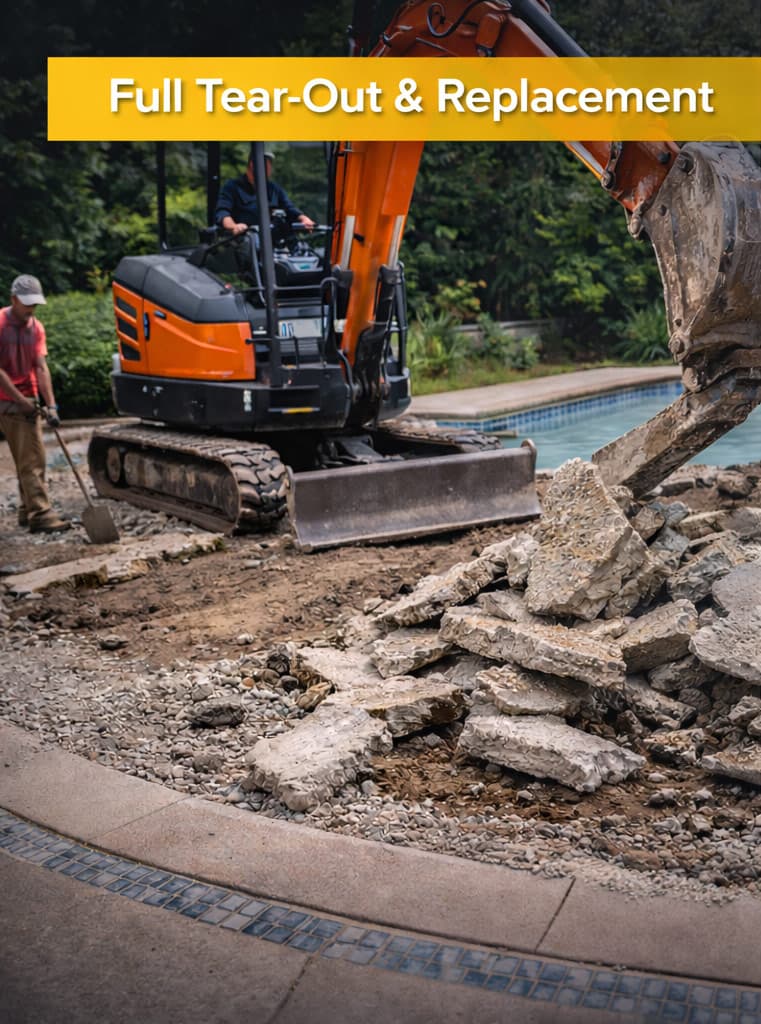
When the existing deck has significant structural issues — deep cracking, widespread settling, heaving, or a base that was never properly compacted — the right move is to remove it entirely and rebuild from a sound foundation. A full tear-out lets us correct grading and drainage issues that an overlay can't fix, and it opens up the possibility of changing the deck material entirely. If your concrete slab is beyond repair, or if you want to switch from poured concrete to pavers or natural stone, a full replacement is the path that gets you there.
This is obviously the more involved approach. It takes longer, costs more, and requires more site preparation. But it's also the approach that produces the best long-term result when the existing substrate can't reliably support a new surface. We'll always be honest about which approach your deck actually needs — we'd rather do the job right once than overlay a surface that's going to fail underneath.
Resurfacing and Overlay
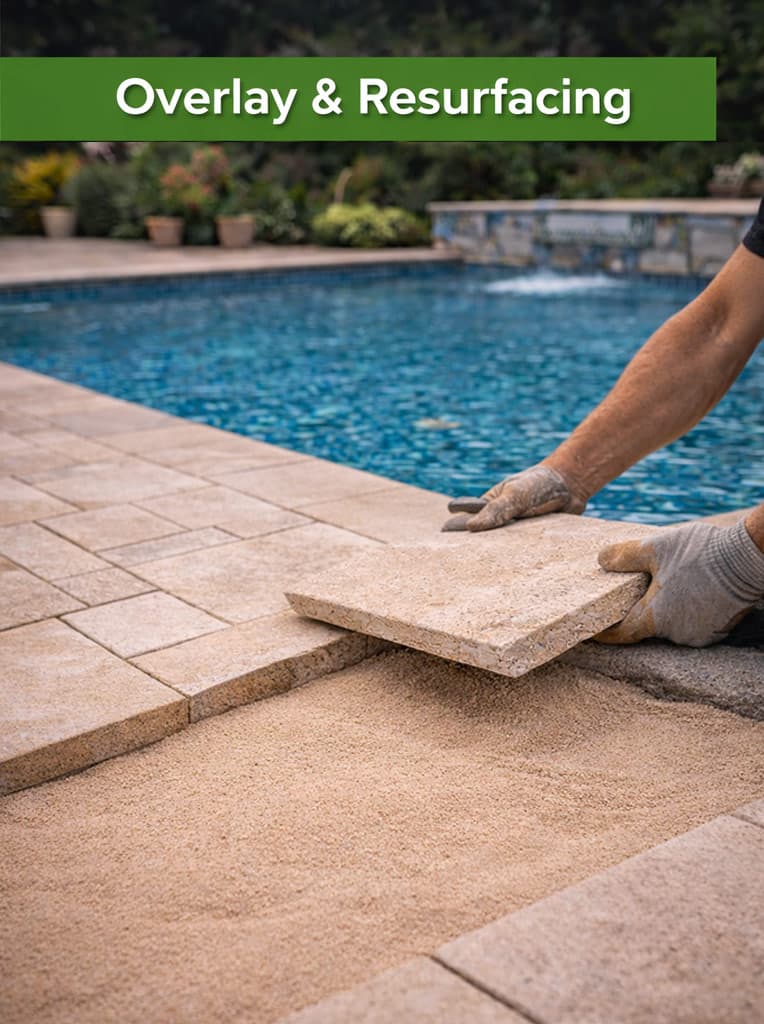
When the existing concrete slab is structurally sound — no major settling, no heaving, no deep structural cracks — an overlay or resurfacing system can transform the look and feel of the deck without tearing anything out. This includes spray-deck and cool-deck coatings, stamped concrete overlays, thin pavers designed to be set over existing slabs, and decorative concrete resurfacing systems.
Overlays are faster, less disruptive, and more cost-effective than a full replacement. They're a strong option when the problem is primarily cosmetic — faded color, worn texture, surface-level cracking, or an outdated look that doesn't match a recently renovated pool. The key is an honest assessment of the substrate underneath. An overlay on a bad foundation is a waste of money, and we'll tell you that upfront.
Choosing Your Material
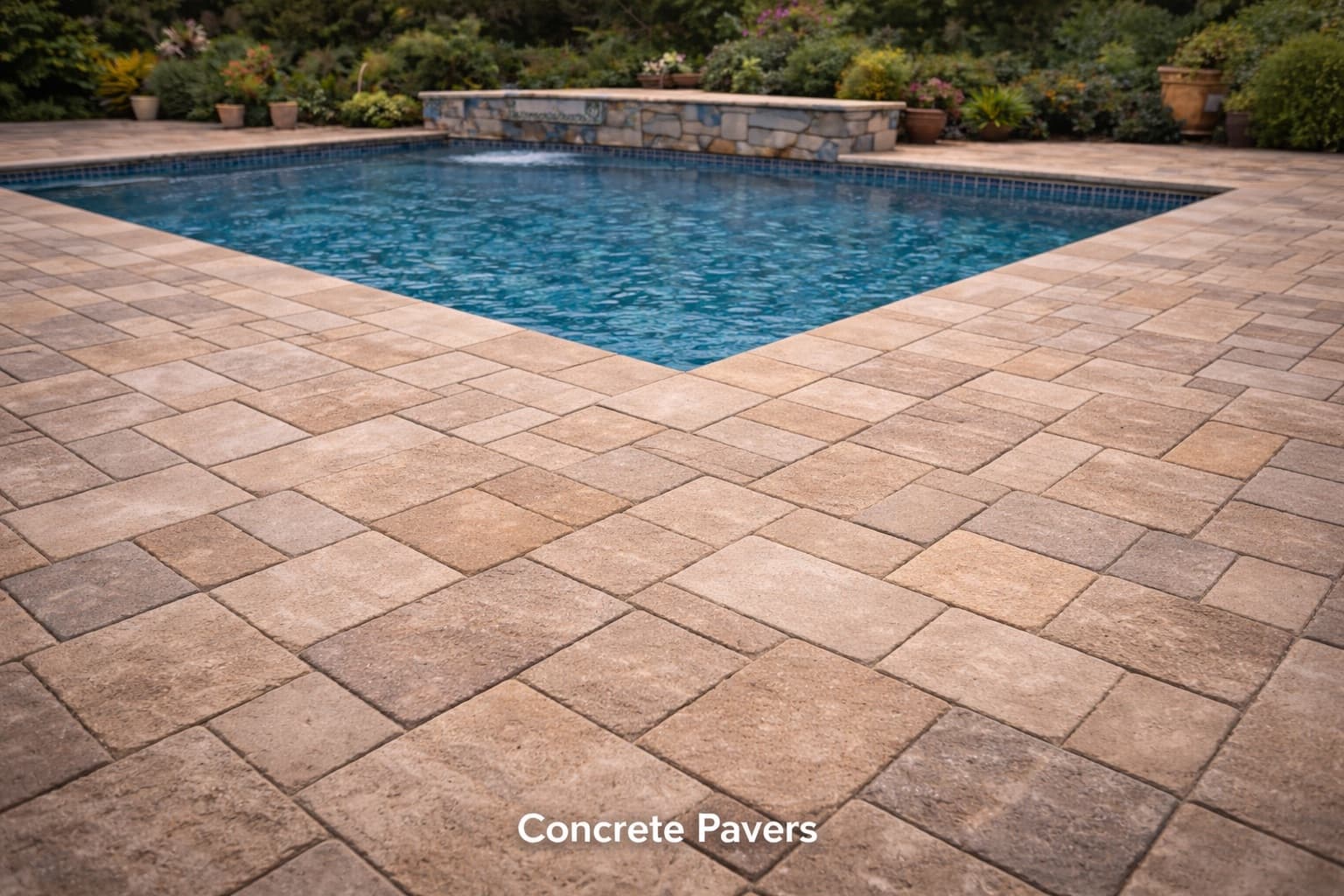
Concrete Pavers
Concrete pavers are the most versatile pool deck material available. They come in a huge range of shapes, sizes, colors, and textures — from clean, modern rectangles to options that convincingly mimic natural stone or aged brick. They're installed on a compacted sand-and-gravel base with sand-swept joints, which means the system is flexible enough to handle minor ground movement without cracking the way a poured slab does.
If an individual paver ever does crack or stain, it can be pulled and replaced without disturbing the rest of the deck. That repairability is a significant long-term advantage. Pavers also drain well between joints, which helps with water management around the pool. For most residential pool deck projects, concrete pavers offer the best balance of design flexibility, durability, and value.
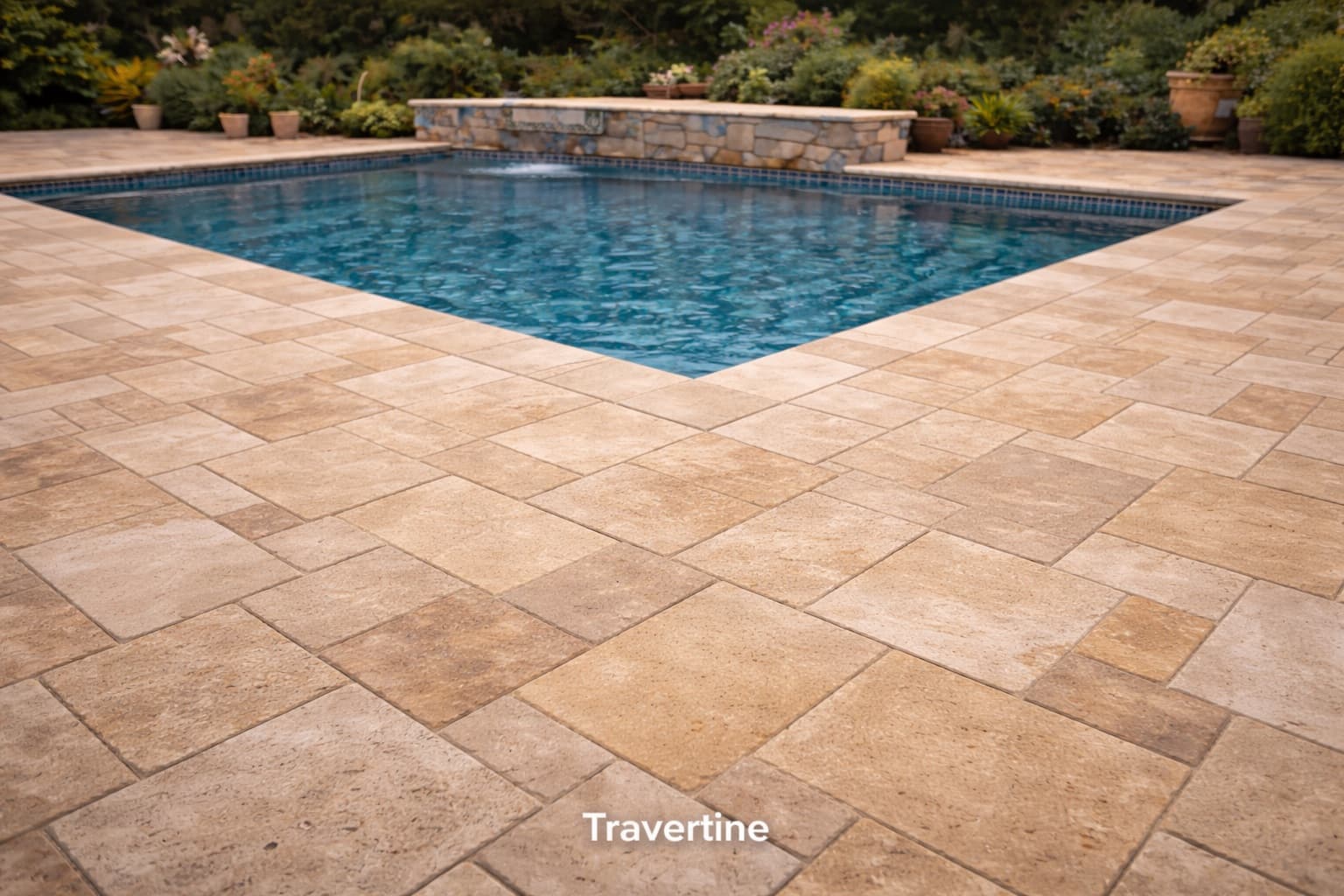
Travertine Pavers
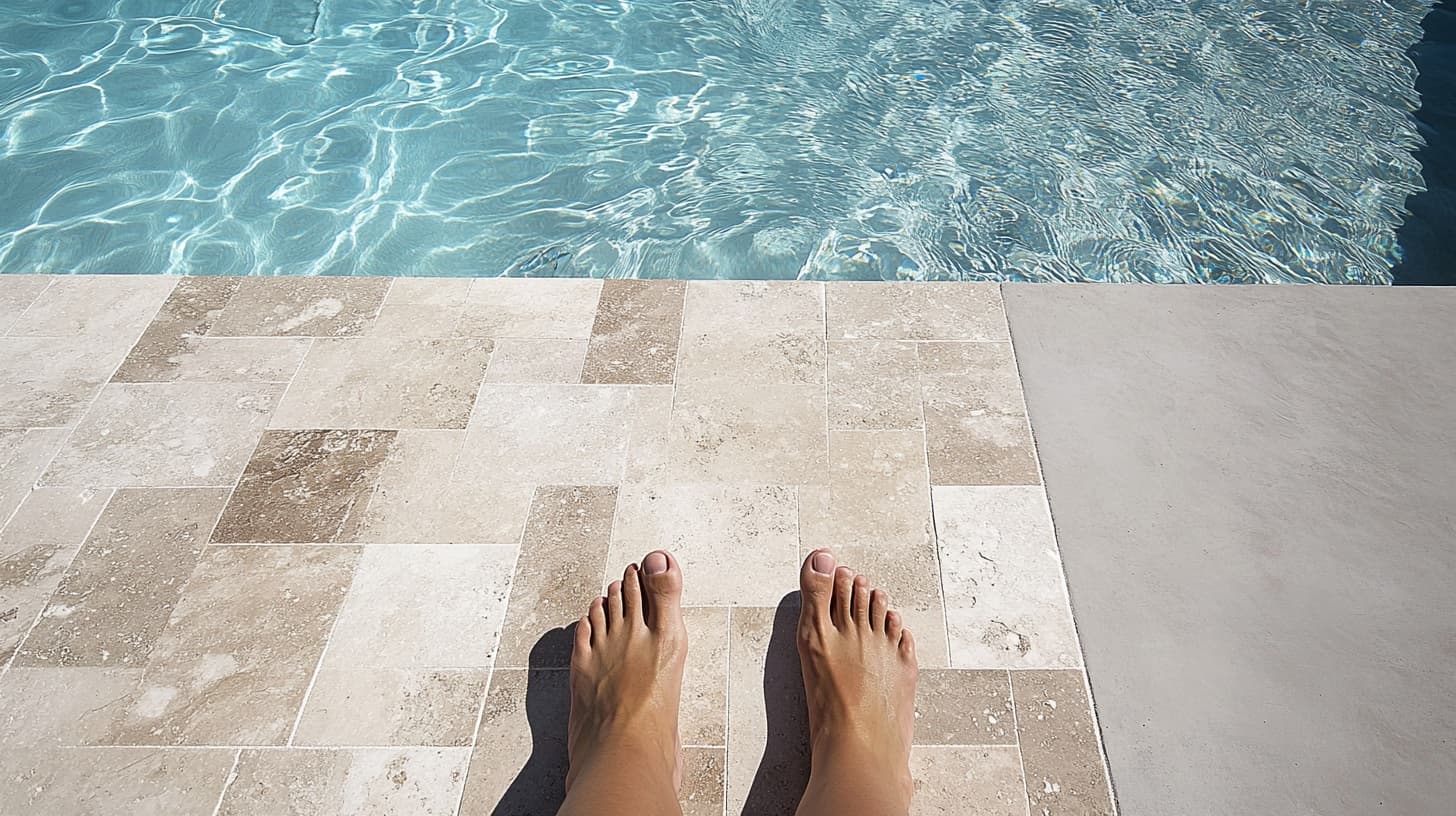
Travertine is a natural stone that's become one of the most popular premium deck materials in the Atlanta market. It has a naturally cool surface temperature — noticeably cooler underfoot than concrete or most manufactured pavers in direct sun — which is a meaningful advantage through Georgia's long summers. The soft, matte texture and natural color variation give it an organic, high-end look that pairs well with travertine coping for a unified aesthetic.
Travertine does require sealing to protect against moisture absorption and staining, and it's softer than concrete pavers, which means it can chip or wear at edges over time in high-traffic areas. But for homeowners who prioritize the feel and look of natural stone and are willing to maintain it, travertine delivers a level of warmth and elegance that manufactured materials can't fully replicate.
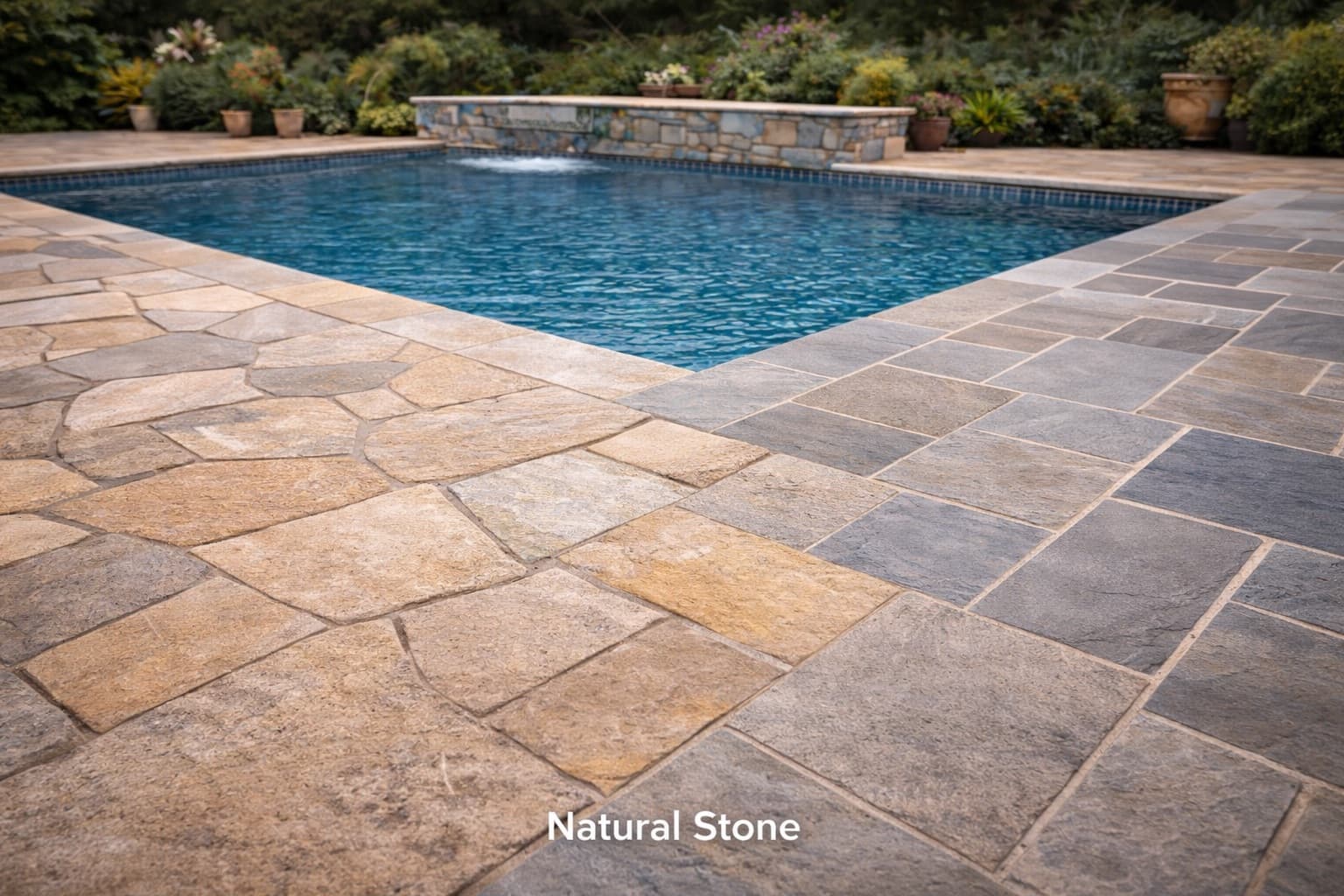
Natural Stone
Flagstone and bluestone bring a distinct, substantial character to a pool deck. Flagstone's irregular shapes and earthy tones create a rustic, organic feel, while bluestone's clean lines and cool gray palette lean more refined and contemporary. Both are extremely durable natural materials that age well and develop a patina over time that many homeowners find more attractive than the original installation.
Natural stone is the most expensive deck option and requires the most skilled installation — especially flagstone, where the irregular shapes demand careful fitting and consistent joint width to avoid a haphazard look. The weight of the material also means the base preparation needs to be thorough. But for large-format, high-end pool decks where the hardscape is a design statement in its own right, natural stone is unmatched.
Spray Deck & Cool Deck Coatings
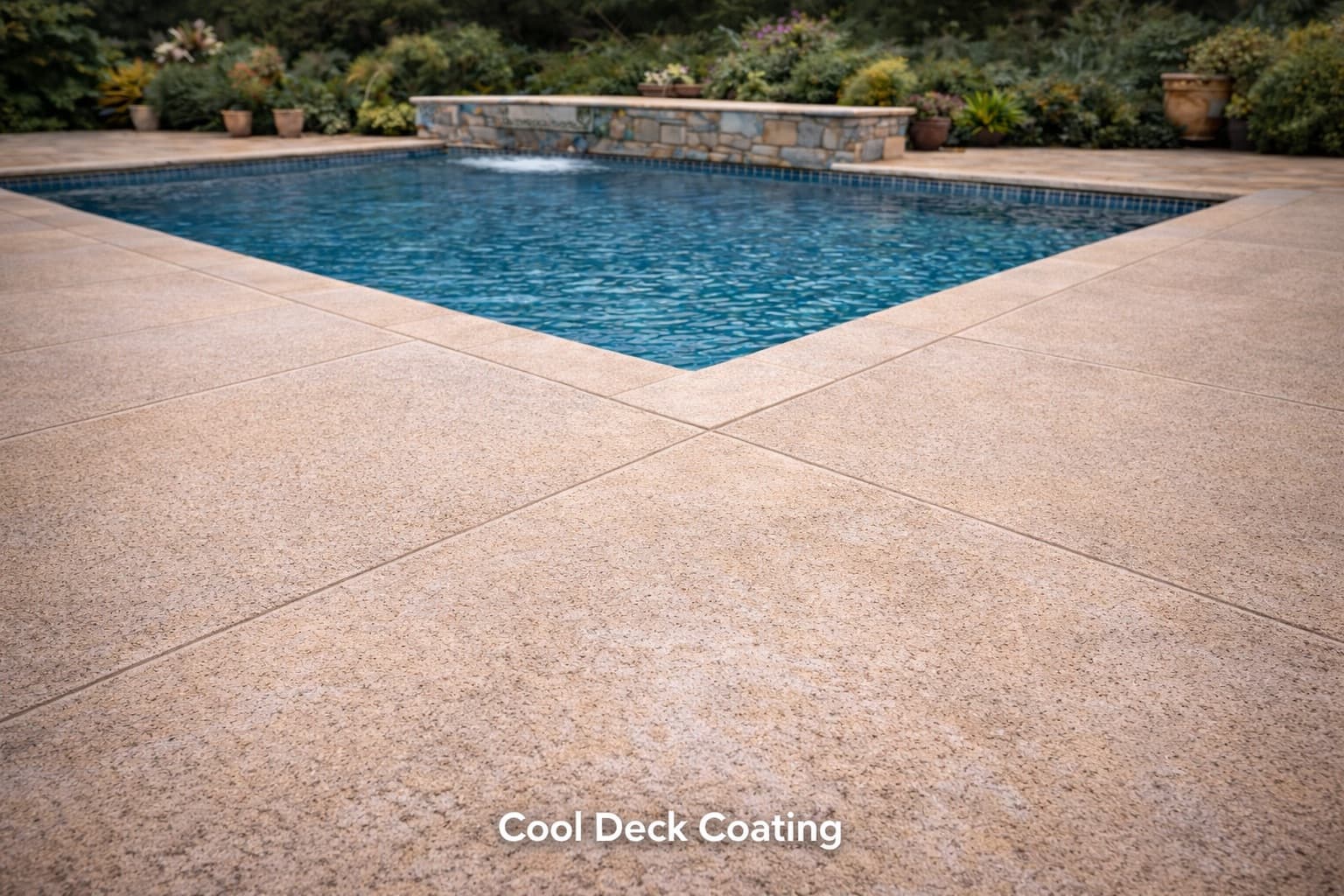
Spray-applied deck coatings — commonly called cool deck or knockdown finishes — are the most cost-effective way to refresh an existing concrete pool deck. These systems are applied directly over the existing slab and create a textured, slip-resistant surface that stays significantly cooler than uncoated concrete. They're available in a range of colors and can be applied in patterns that break up the monotony of a plain concrete deck.
Cool deck coatings are best suited for decks where the underlying concrete is structurally sound but cosmetically tired. They won't hide major cracks or settling, and they do wear over time — especially in high-traffic areas — so they'll need to be recoated eventually. But for a functional, attractive, heat-reducing surface at the lowest price point, they're a practical option that delivers immediate visual improvement.
Every Square Foot,
Done by Our Crew
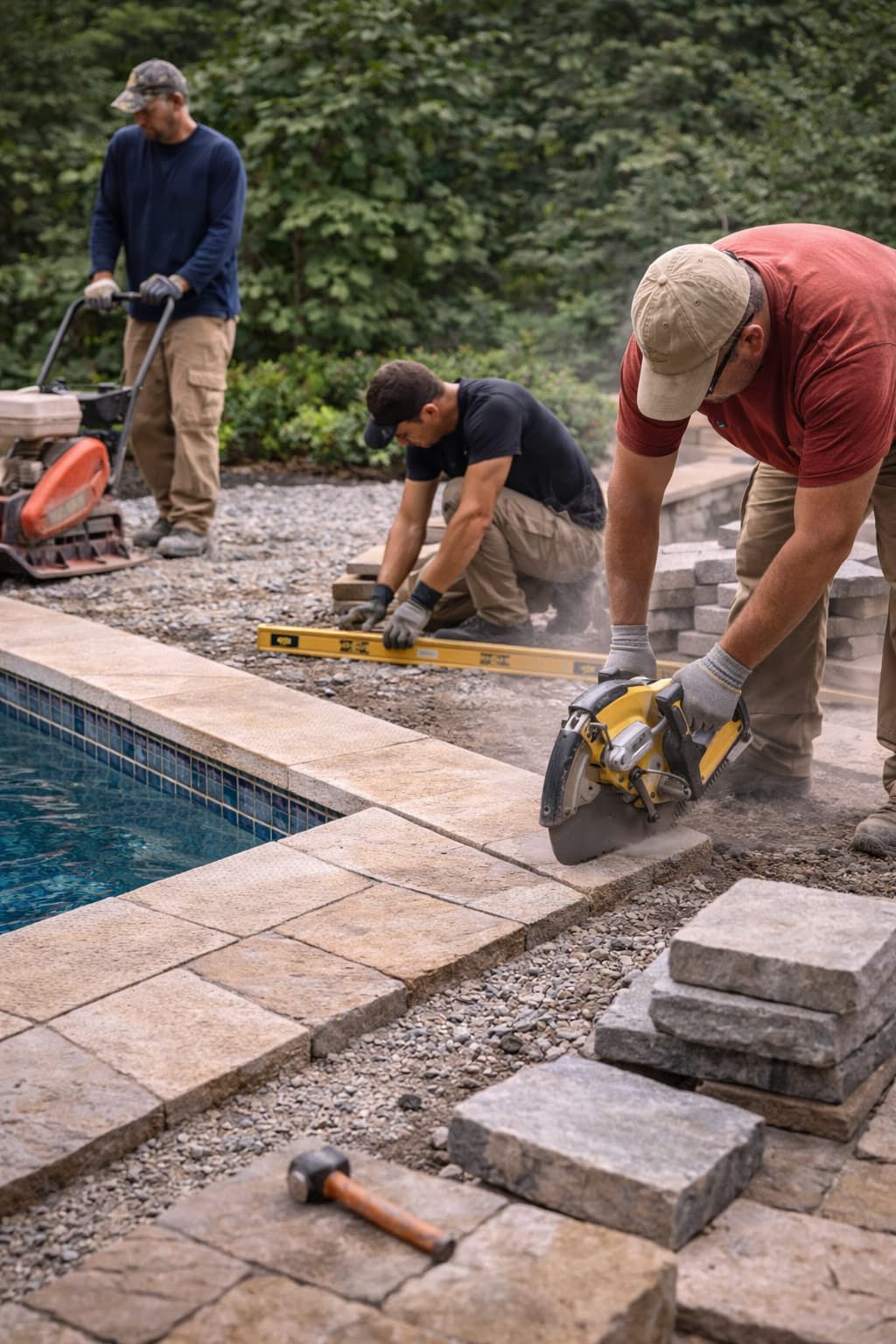
Pool deck work is labor-intensive, physically demanding, and detail-oriented. Base preparation has to be right — proper compaction, correct grade for drainage, consistent depth. Pavers and stone have to be cut precisely at every edge, curve, and transition. Joints need to be consistent. Levels need to be true. And the entire surface has to drain away from the pool, not toward it.
Our team handles all of this directly. There's no subcontracted grading crew, no outsourced paver installation team showing up for a day and moving on. The same people who plan the layout are the ones cutting and setting the material. That continuity matters — it means adjustments happen in real time, standards stay consistent across the entire surface, and there's no finger-pointing between trades if something isn't right.
It also means you have one point of contact for the entire project. One phone call if you have a question. One crew who knows the plan, knows the site, and takes ownership of the finished product from the first square foot to the last.
Beyond the Pool Edge
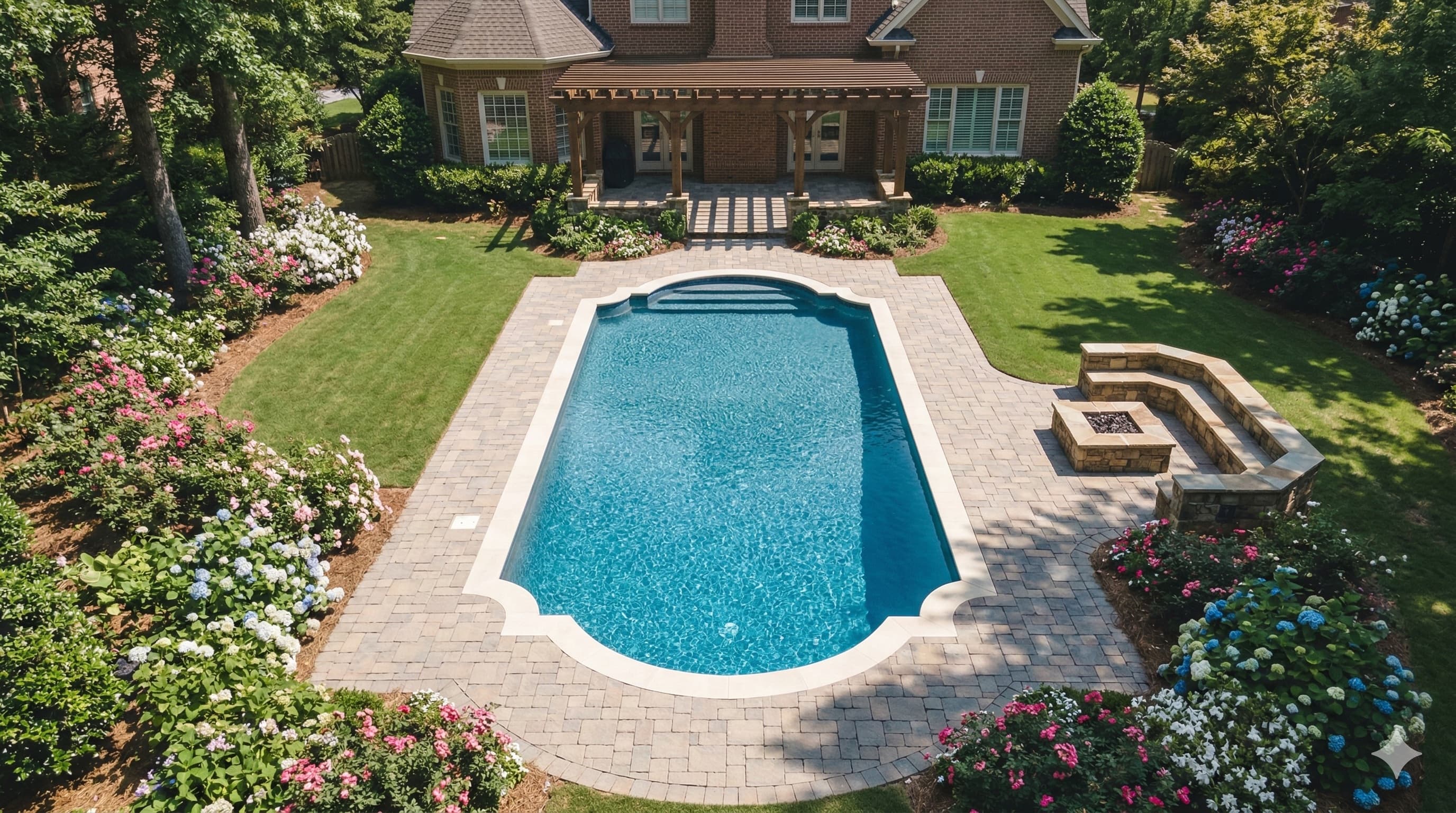
A pool deck renovation doesn't have to stop at the coping line. For many homeowners, the pool surround is part of a larger outdoor living space that includes patios, walkways, seating areas, outdoor kitchens, and transitions to the yard. When those surfaces are done at different times or by different contractors, the result is usually a patchwork of materials, levels, and styles that never quite comes together.
We handle the full hardscape scope — from the immediate pool surround out to the property line if that's what the project calls for. Patios, extended entertaining areas, walkways, steps, retaining walls, and transitions between different grade levels. Doing the entire hardscape as one project with one crew means consistent materials, unified grading and drainage, and a finished product where every surface connects to the next the way it should.
If your renovation is limited to the pool surround, that's fine — we do plenty of those. But if you've been thinking about the bigger picture, this is the most efficient and cost-effective time to address it all at once.
Common Questions About Pool Deck
It comes down to the condition of the existing substrate. If the concrete slab is structurally sound — no major settling, heaving, or deep cracking — an overlay or resurfacing is usually a viable option. If there are significant structural issues, grade problems, or drainage that's flowing toward the pool instead of away from it, a full tear-out and rebuild is the better investment. We'll assess the existing deck during your consultation and give you an honest recommendation.
It depends on the scope. A resurfacing overlay on an existing slab can be done in 3 to 5 days. A paver or stone installation over the immediate pool surround typically takes 5 to 10 days. Larger projects that include extended patios, walkways, and full backyard hardscape can take 2 to 4 weeks. We'll provide a detailed timeline during the planning phase based on your specific project.
It depends on the material and color. Travertine is naturally one of the coolest options — its density and light color reflect heat rather than absorbing it. Light-colored concrete pavers also perform well. Spray-deck and cool-deck coatings are specifically designed to reduce surface temperature. Darker materials and standard poured concrete will be warmer. We always factor heat performance into our material recommendations, especially in Atlanta's climate.
In most cases, yes — though not simultaneously. The pool can remain filled during a deck renovation, but the work area needs to be clear and safe, which means the pool won't be usable on active work days. If the deck renovation is part of a larger project that includes resurfacing (which requires draining), the entire scope is coordinated so the pool is out of commission for the shortest time possible.
This is one of the most important design decisions in the project, and it's something we walk through with you before any materials are ordered. The deck, coping, and tile need to work together visually — whether that means matching, complementing, or deliberately contrasting. We bring samples on-site so you can see materials in the actual light and context of your backyard, not just under showroom lighting.
A properly installed paver system — with adequate base compaction, correct depth of gravel and sand, and appropriate edge restraints — is extremely stable. Minor settling can occur over time, especially in areas with heavy traffic or significant tree root activity, but individual pavers can be lifted, the base corrected, and the pavers reset without replacing anything. That repairability is one of the biggest long-term advantages of a paver deck over poured concrete.
Often Done Together
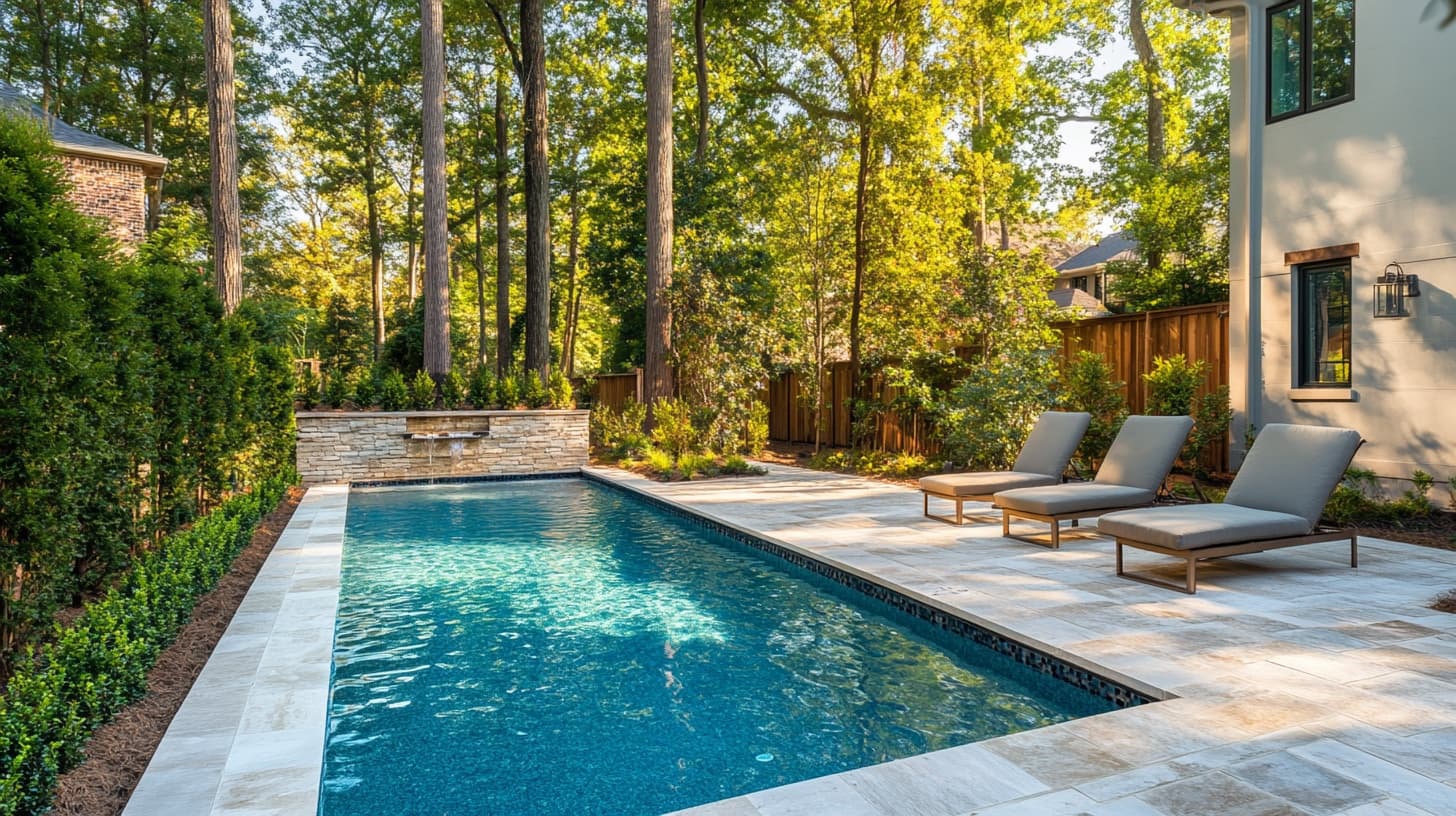
A pool deck renovation naturally overlaps with the surfaces and structures at its borders. Here are the services our clients most commonly pair with a deck project:
Coping
Coping is the cap stone that frames your pool and protects its structure. We cut, set, and finish every piece by hand — in travertine, natural stone, brick, pavers, and cantilevered concrete.
Pool Resurfacing
Your pool's interior surface determines how it looks, feels, and holds up over time. We manage the full resurfacing process — from drain and prep through finish application and startup — in plaster, pebble, and quartz.
Structural Modifications
Tanning ledges, spa additions, water features, bench seating, beach entries, and depth changes — we redesign how your pool works, not just how it looks.
Ready to Renovate Your Deck?
Tell us what you're working with — the current deck material, what's bothering you about it, and how far you're thinking of taking the project. Whether it's the immediate pool surround or the entire backyard, we'll walk the site with you, talk through options, and give you an honest plan.