Every homeowner who calls us asks some version of the same question: when should we do this?
The short answer: fall and winter are the smartest time to renovate your pool in Georgia. But the right time depends on what kind of renovation you're doing, how flexible your timeline is, and when you want to be swimming again.
Here's how to think about the timing.
Why Fall and Winter Win
Pool renovation in Georgia has a clear seasonal pattern, and understanding it can save you money, stress, and wait time. (If you're still in the "how much will this cost?" phase, start with our Atlanta resurfacing cost guide — then come back here to figure out timing.)
You're Not Using the Pool Anyway
Georgia's swimming season realistically runs from May through September for most people. October through March, your pool is sitting there. Renovating during these months means zero lost swim time. You drain the pool in October, finish the work in November, and the pool is full and cured well before next summer.
Compare that to calling in May — you lose weeks of prime swimming while the work happens, and you're competing with every other homeowner who had the same idea.
Scheduling Is Easier
Spring and early summer are peak season for pool renovation companies across Metro Atlanta. The good companies book out 4 to 8 weeks during peak, which means your "want it done before Memorial Day" call in March might not actually get done until June or July.
In the fall and winter months, scheduling is significantly more flexible. We can typically start fall and winter projects within 2 to 3 weeks of signing the contract, versus 4 to 6+ weeks during peak season.
Material Availability
Some specialty materials — particular tile patterns, specific StoneScapes blends, certain travertine colors — occasionally have supply chain delays. Starting your project in the off-season gives more buffer time if a material needs to be ordered, without risking your summer timeline.
Month-by-Month Breakdown for Georgia
September–October: The Sweet Spot
This is the ideal window. The swimming season is winding down, the weather is still warm enough for optimal material application (pebble and plaster finishes cure best above 50°F), and you have months of lead time before next summer.
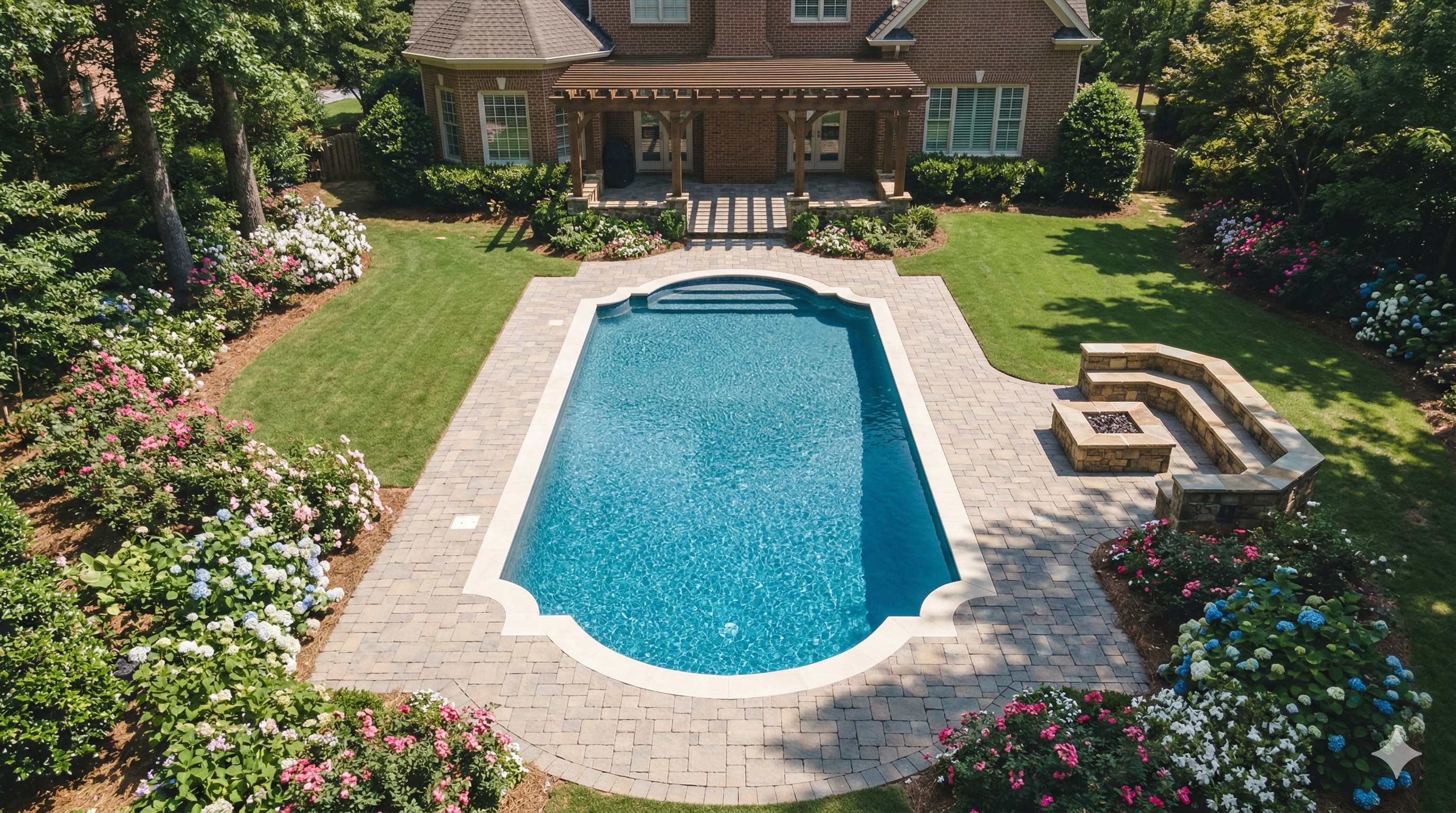
Resurfacing, coping, tile, and deck work all proceed smoothly in early fall. Ground conditions are typically dry (Georgia's driest months), which is ideal for deck and paving work.
Best for: Any scope of renovation. This is the "Goldilocks" window — not too hot, not too cold, no seasonal rush.
November–December: Still Great, With Some Caveats
Air and water temperatures start dropping, but Metro Atlanta rarely sees sustained freezing until late December or January — and even then, it's brief. Most renovation work proceeds normally through November and into early December.
The caveat: Certain finish materials have temperature requirements for application. Plaster and pebble finishes shouldn't be applied if the temperature will drop below 40°F within 24 hours of application. Experienced crews (like ours) monitor weather forecasts and schedule application days accordingly. This isn't a dealbreaker — it just means the work might pause for a cold snap and resume a few days later.
Best for: Resurfacing, coping, and tile work. Deck work with pavers or natural stone is also fine. Large concrete pours (stamped concrete decks) are better scheduled for warmer months.
January–February: The Planning Window
January and February in Georgia bring the coldest temperatures and occasional freezing. Active renovation work slows down, but this is actually the best time for planning and preparation.
Use this time to: Get consultations, visit material showrooms, finalize your design choices, and get on the schedule for a March or April start. Homeowners who plan in January are first in line when the weather breaks.
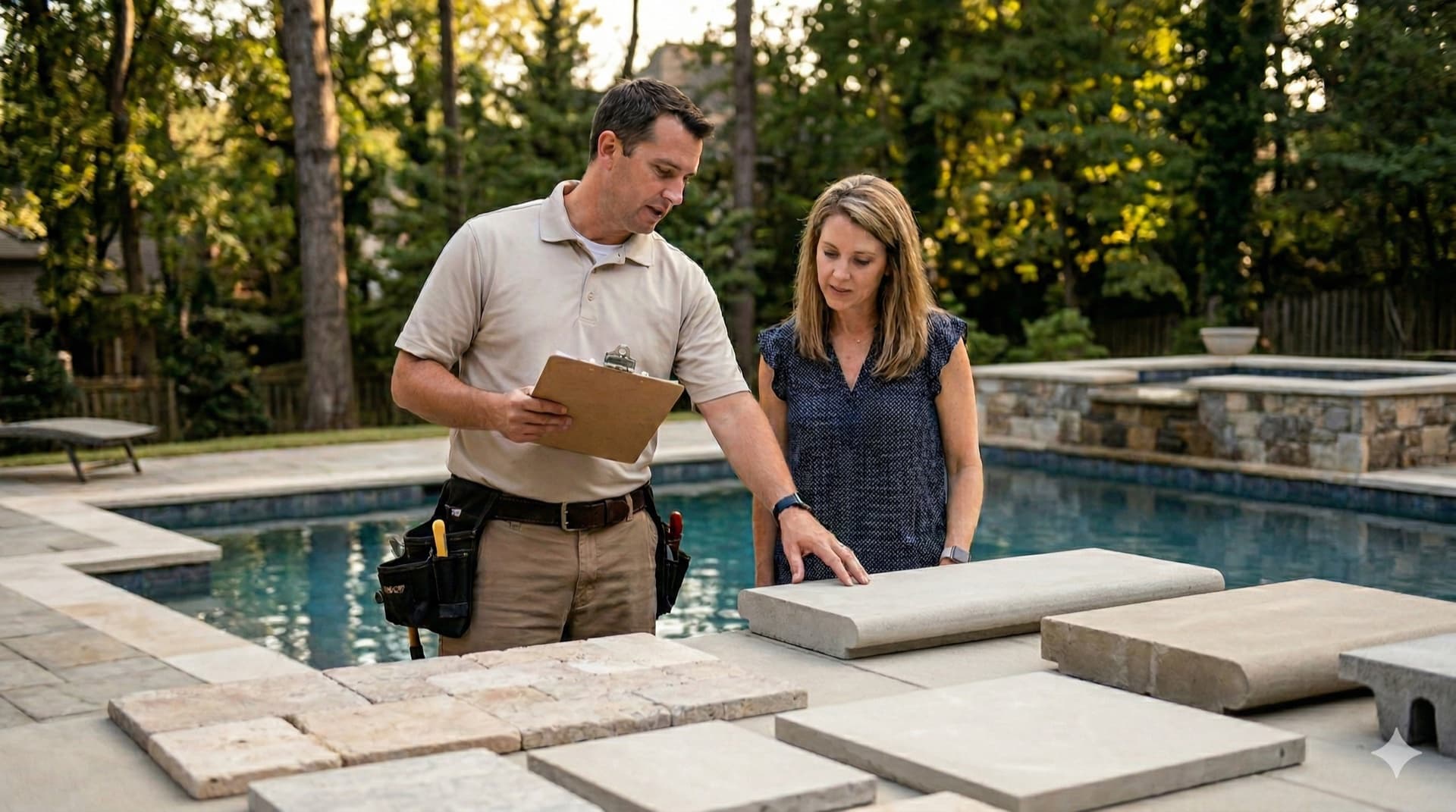
We use the winter months for consultations and material selection appointments. We'll come to your home, assess the pool, and either bring samples or take you to the material center to pick finishes, tile, and coping. Having everything selected before spring means your project starts on day one of good weather — no delays waiting for decisions.
March–April: Early Spring Advantage
Weather improves, and renovation work resumes at full capacity. If you planned during winter, your project can be underway in March and finished by April — giving you a freshly renovated pool for the entire summer season.
The early spring advantage is real: companies aren't fully booked yet, materials are in stock, and you have time to deal with any surprises without jeopardizing your summer.
Best for: All renovation types. If you want to swim all summer with a brand-new pool, scheduling work for March or April is the move.
May–August: Peak Season (Proceed with Caution)
This is when most people call. The warm weather triggers the "we should really do something about this pool" thought, and suddenly every pool company's phone is ringing.
Reality check: If you call in May wanting a full renovation, you may not get on the schedule until June or July. If the scope includes structural work or permitting, you could be looking at an August start — which means your pool is out of commission during the hottest weeks of the year.
Peak season isn't impossible — We do plenty of work through the summer. But you'll wait longer, and you'll be without your pool during the weeks you want it most.
The summer exception: Minor work like equipment upgrades — a new pump, LED lighting, a salt system conversion — can often be done with minimal pool downtime and makes sense to schedule whenever needed. You might lose a day or two of swimming, not weeks.
How Renovation Type Affects Timing
Resurfacing Only
Ideal timing: September through November, or March through April.
Minimum timeline: 5 to 7 days of active work, plus 5 to 7 days for curing and filling. Call it 2 to 3 weeks from drain to swim.
Temperature sensitivity: Moderate. Finish application needs temperatures above 40°F for 24 hours post-application.
Resurfacing + Coping + Tile
Ideal timing: September through November, or March through April.
Minimum timeline: 7 to 14 days of active work, plus curing. Call it 3 to 5 weeks from drain to swim.
Temperature sensitivity: Same as resurfacing. Tile work is less temperature-sensitive than plaster/pebble application.
Full Renovation (Surface + Coping + Tile + Deck)
Ideal timing: September through October is best. March through April works if you planned during winter.
Minimum timeline: 3 to 6 weeks of active work depending on deck size and complexity. Factor in permitting if structural modifications are involved.
Temperature sensitivity: Higher. Concrete and mortar work is more affected by freezing temperatures. Paver installation is less sensitive.
Structural Modifications (Tanning Ledge, Spa Addition, etc.)
Ideal timing: September through October or March through April. These projects benefit from stable weather and dry conditions.
Minimum timeline: 4 to 8 weeks depending on scope, plus permitting time.
Temperature sensitivity: High for concrete and plaster work. Planning and permitting can happen anytime.
The Bottom Line on Timing
If you're reading this and it's fall, you're in the best possible position — act now and your renovation can be done before the holidays, with a pool ready for next summer.
If it's winter, use the next few weeks to plan. Get consultations, pick your materials, and lock in your spring schedule.
If it's spring, don't wait. Every week you delay pushes your project further into peak season.
If it's summer and you're staring at a pool that needs work, start the planning process now for a fall project. You'll swim the rest of this season and have a renovated pool ready for next year.
A Timing Example: How One Fall Project Came Together
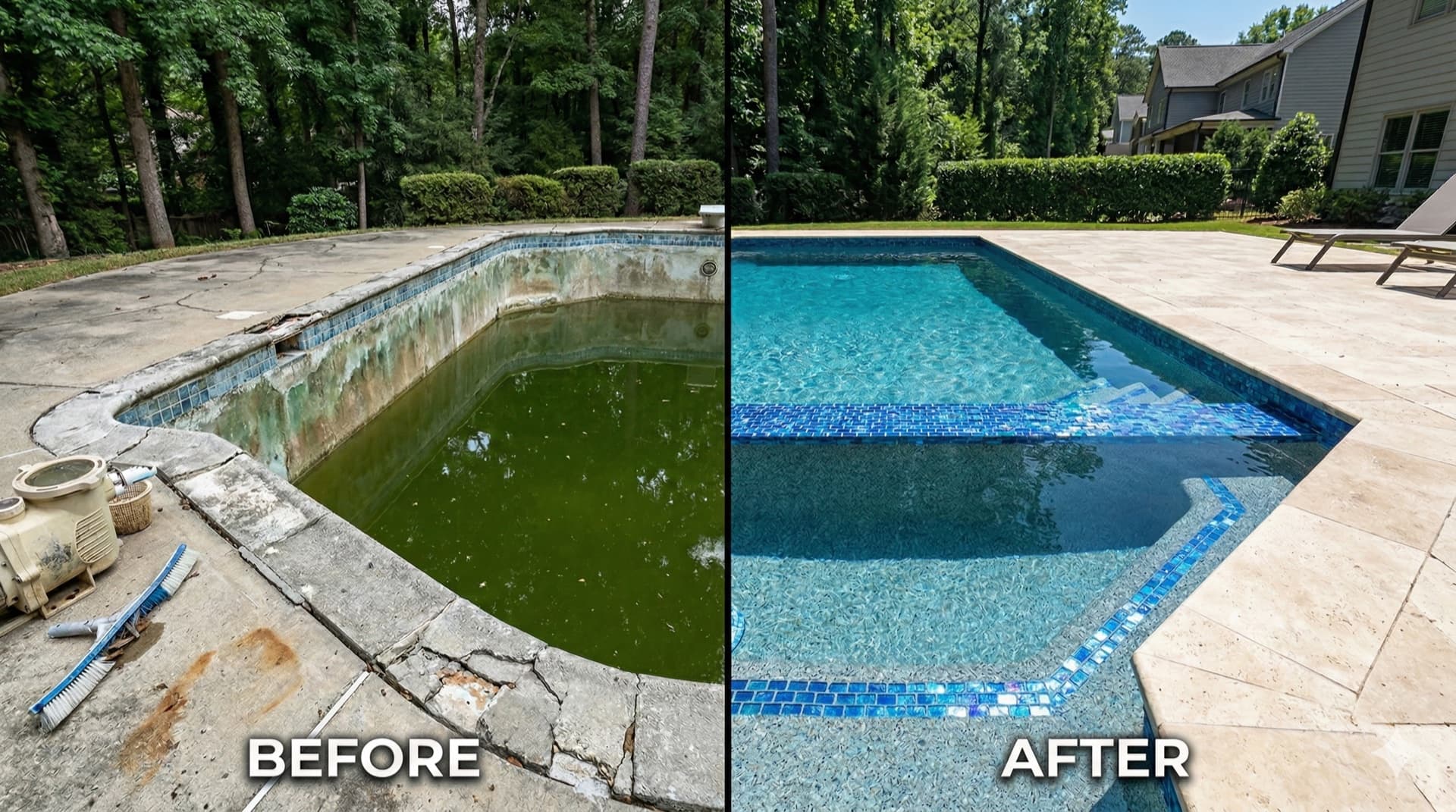
A homeowner in Marietta reached out in late September with a pool that needed resurfacing, new coping, and a tile upgrade. The plaster was 18 years old and rough enough to scratch skin, and the poured concrete coping was cracking along the beam.
Because it was fall, the crew started within two weeks. The pool drained in mid-October, coping and tile work completed over nine days, and the StoneScapes pebble finish went on during a 68°F day in early November — pool filled and curing before Thanksgiving. Total time from first call to completion: about six weeks. The same project started in May would have taken eight to ten weeks just because of scheduling backlog — plus lost swimming time.
The Pool & Hot Tub Alliance's annual contractor survey consistently shows that off-season scheduling reduces average project timelines by 20 to 30 percent. That tracks with what we see in Metro Atlanta.
When Should You Call?
Whatever the calendar says, the best time to start is a conversation. We offer free consultations year-round across Metro Atlanta — from Marietta to Alpharetta to Peachtree City and everywhere in between.
We'll look at your pool, talk through the scope, and help you plan a timeline that makes sense for your situation. If fall is the right move, great. If you need to move faster, we'll figure out how to make that work.
Call or fill out the form on the contact page. Let's get the timing right.
Ready to Talk About Your Pool?
Get a free, no-obligation consultation from Cornerstone Pool & Remodel.
Request a Free Quote