Your pool deck takes more abuse than any other part of your outdoor space. Georgia sun beating down all summer. Bare feet. Pool chemicals splashing over the edge. Freeze-thaw cycles in winter. Whatever material you choose has to handle all of it while still looking good and staying safe to walk on.
The two materials we install most often across Metro Atlanta are travertine and concrete pavers. Both are excellent choices — but they're different in ways that matter, and the right pick depends on your priorities, your pool's aesthetic, and how you use your outdoor space.
Travertine: The Premium Natural Stone
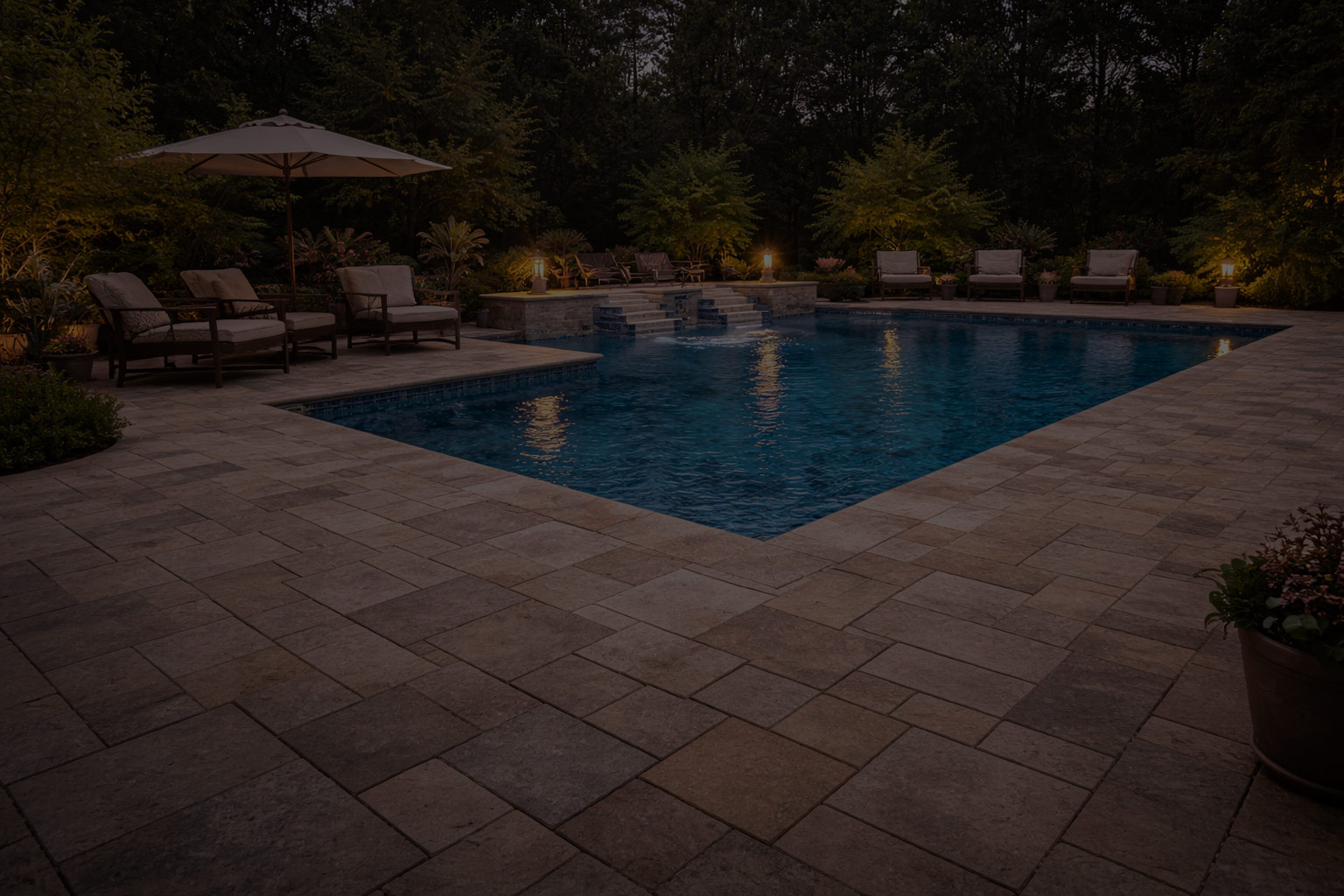
Travertine is a natural limestone that's been used around pools and outdoor spaces for centuries. It's quarried in large blocks and cut into tiles or pavers, typically in tumbled or honed finishes.
Why Homeowners Choose Travertine
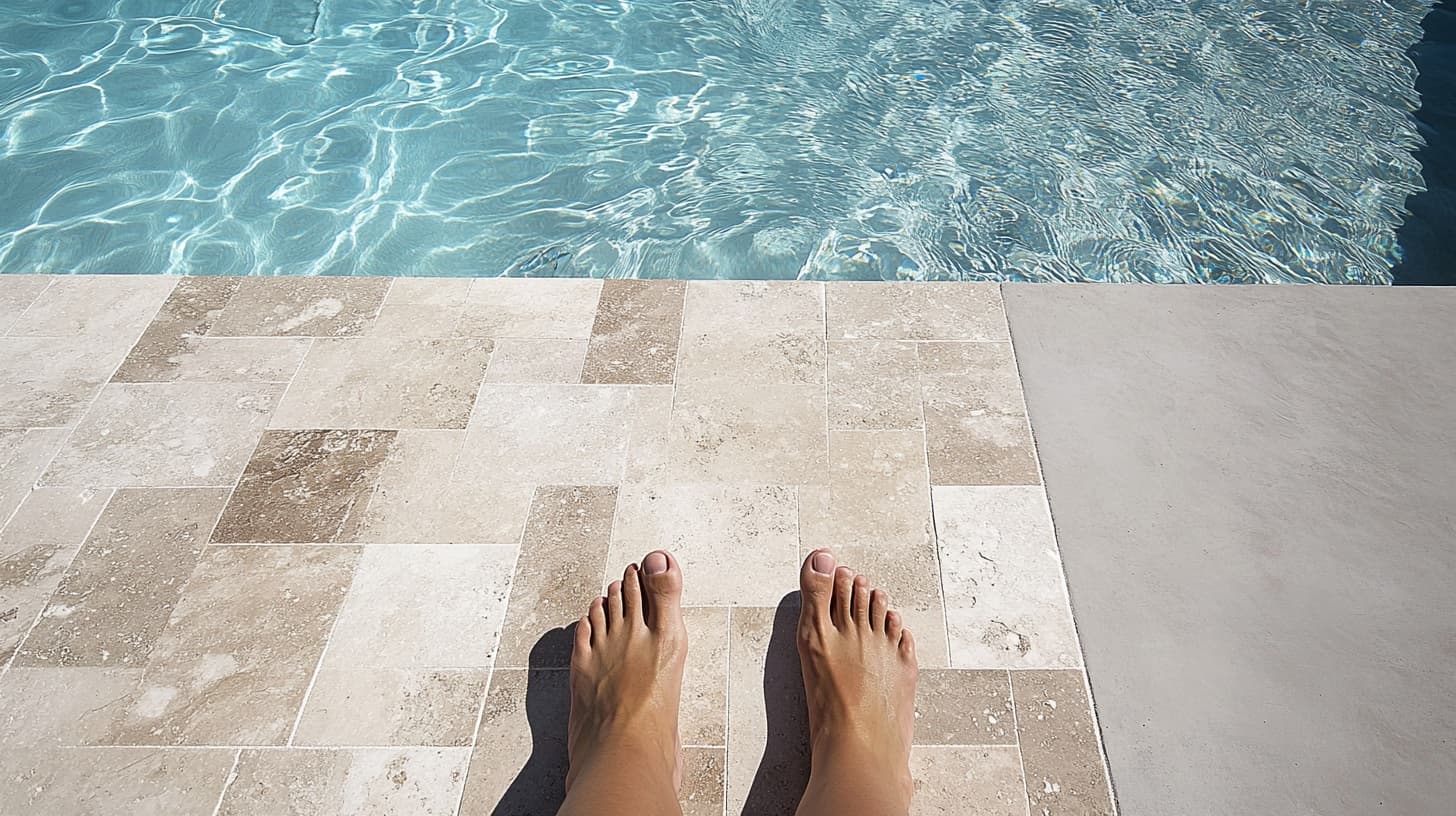
It stays cool. This is the biggest practical advantage in Georgia. Travertine's natural density and light color mean it absorbs less heat than most alternatives. On a 95-degree July afternoon, travertine is noticeably cooler underfoot than concrete pavers or poured concrete. If you or your kids walk barefoot around the pool — and everyone does — this matters.
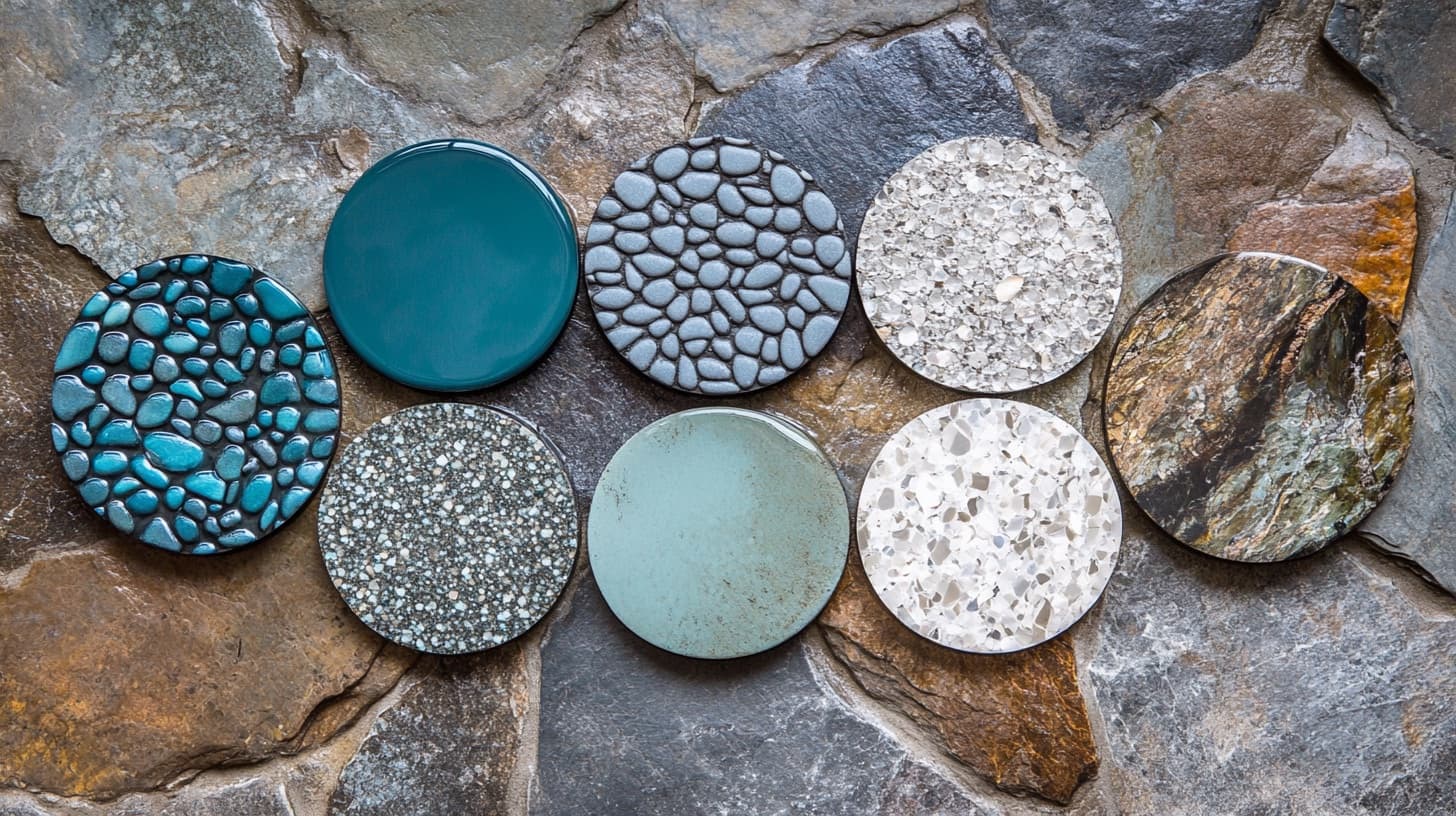
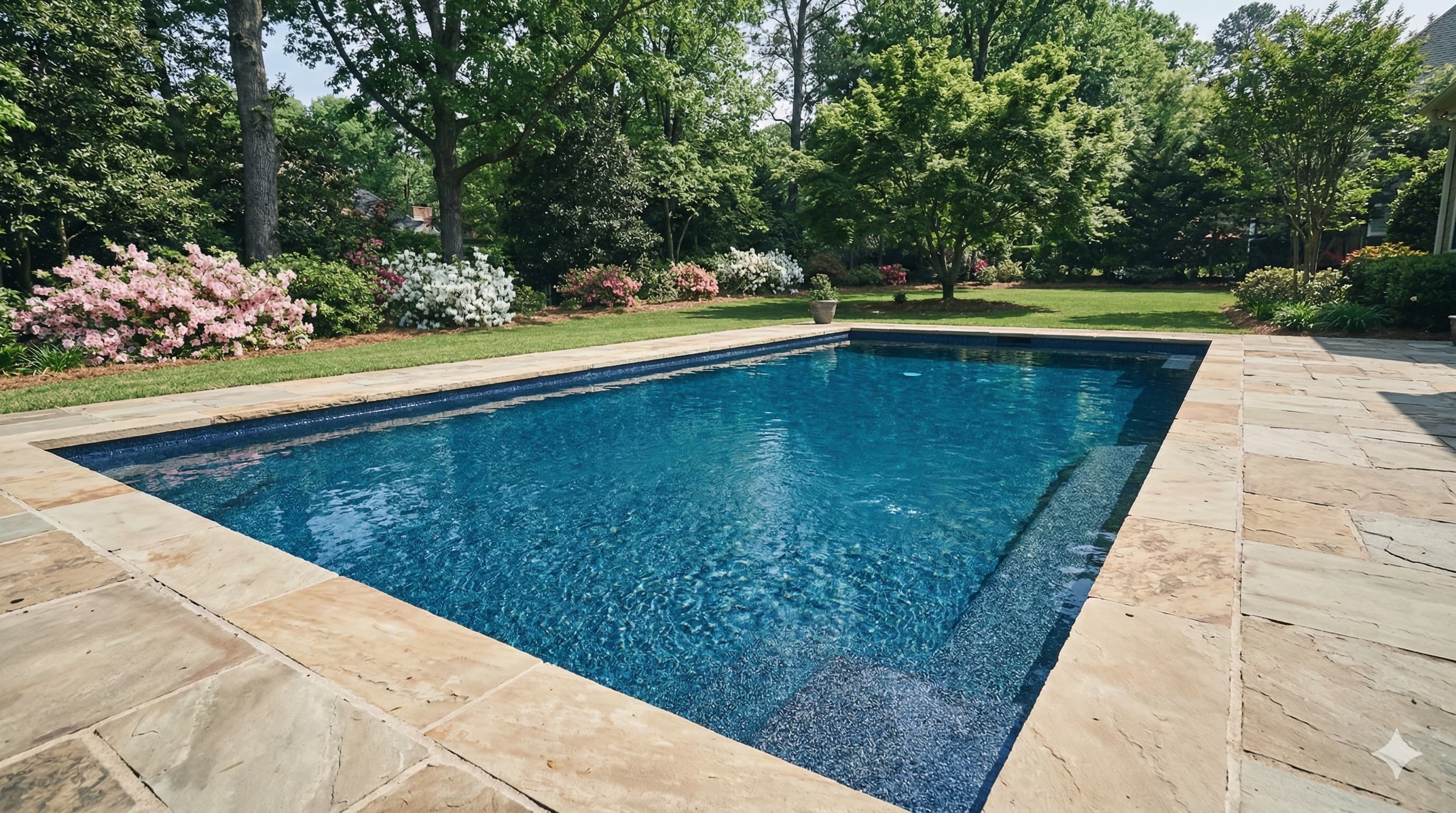
The look. There's a richness to natural stone that manufactured products can't fully replicate. Travertine has natural variation in color and veining that gives your deck a sophisticated, organic feel. It pairs exceptionally well with natural stone coping, pebble pool finishes, and a well-chosen waterline tile — the combination of natural materials across the deck, coping, and water's edge creates a cohesive look that's hard to beat.
Durability. Quality travertine holds up well in Metro Atlanta's climate. It handles freeze-thaw cycles better than many people expect — the key is proper installation with the right base material and joint spacing to allow for thermal expansion.
What to Know Before Choosing Travertine
Cost. Travertine runs $15 to $25 per square foot installed, compared to $12 to $20 for most concrete pavers. For a 500-square-foot deck, that difference adds up to $1,500 to $2,500 more.
Porosity. Travertine is naturally porous, which means it can absorb stains if you don't seal it. Pool chemicals, red clay (a constant in Georgia), and organic debris can discolor unsealed travertine. A quality sealer applied every 2 to 3 years handles this, but it's maintenance you need to stay on top of.
Consistency. Because it's a natural product, travertine varies from batch to batch. If you need to replace a section years later, matching the exact color and pattern can be tricky. Buying a few extra pieces during the original installation is smart insurance.
Concrete Pavers: The Engineered Alternative
Concrete pavers are manufactured from cement, aggregate, and pigments, then compressed into uniform shapes. Brands like Belgard, Tremron, and Pavestone dominate the Atlanta market. They come in a wide range of colors, textures, and patterns — including styles designed to mimic natural stone.
Why Homeowners Choose Pavers
Versatility. The range of shapes, colors, and patterns is enormous. You can create herringbone layouts, running bond patterns, or borders with contrasting colors. If you have a specific design in mind, pavers probably offer the most flexibility.
Consistency. Every paver is manufactured to the same spec. Colors are uniform, dimensions are precise, and replacement pieces match perfectly years later. For homeowners who want a uniform, controlled look, this is a plus.
Strength. High-quality concrete pavers are extremely strong — rated for vehicular traffic in many cases. They won't crack under normal pool deck use, and individual pavers can be replaced if one does get damaged.
Cost. Pavers are typically the more budget-friendly option, running $12 to $20 per square foot installed depending on the product and pattern complexity.
What to Know Before Choosing Pavers
Heat retention. This is the main downside in Georgia. Darker-colored concrete pavers absorb and radiate heat significantly more than travertine. Even lighter pavers get hotter underfoot than natural stone. If heat is a concern, stick to the lightest colors available — but know that even light pavers run warmer than travertine.
Fading. Pigmented concrete can fade over years of UV exposure. Georgia's intense sun accelerates this. Quality pavers from reputable manufacturers fade less, but some color loss over 8 to 10 years is typical. A sealer helps slow the fading.
The "manufactured" look. This is subjective, but worth mentioning. Even the best stone-look concrete pavers don't fully replicate natural stone up close. From a distance, the difference is minimal. Next to a pool with natural stone coping and a pebble finish, the contrast can be more noticeable.
How Georgia's Climate Affects Both Materials
Metro Atlanta's climate throws a few curveballs at pool decks that homeowners in Florida or Arizona don't deal with:
Freeze-thaw cycles. We typically get 10 to 20 freeze-thaw cycles per winter. Both travertine and pavers handle this well IF the installation is done correctly — meaning proper base preparation, adequate drainage slope, and appropriate joint spacing. Poor installation is what causes cracking and shifting, not the material itself.
Red clay. Georgia's red clay is the enemy of light-colored pool decks. It stains anything porous. Travertine needs sealing to resist it. Pavers handle it better due to their denser surface, but lighter colors still show clay staining if not cleaned regularly.
Heavy rain. Atlanta gets significant rainfall, and proper drainage is critical for any pool deck material. Both travertine and pavers are installed with permeable joints that allow water to drain through, but the base preparation and grading need to be right. Standing water on a pool deck isn't just a nuisance — it's a slip hazard and accelerates deterioration.
Making the Decision
Here's how we'd frame the choice:
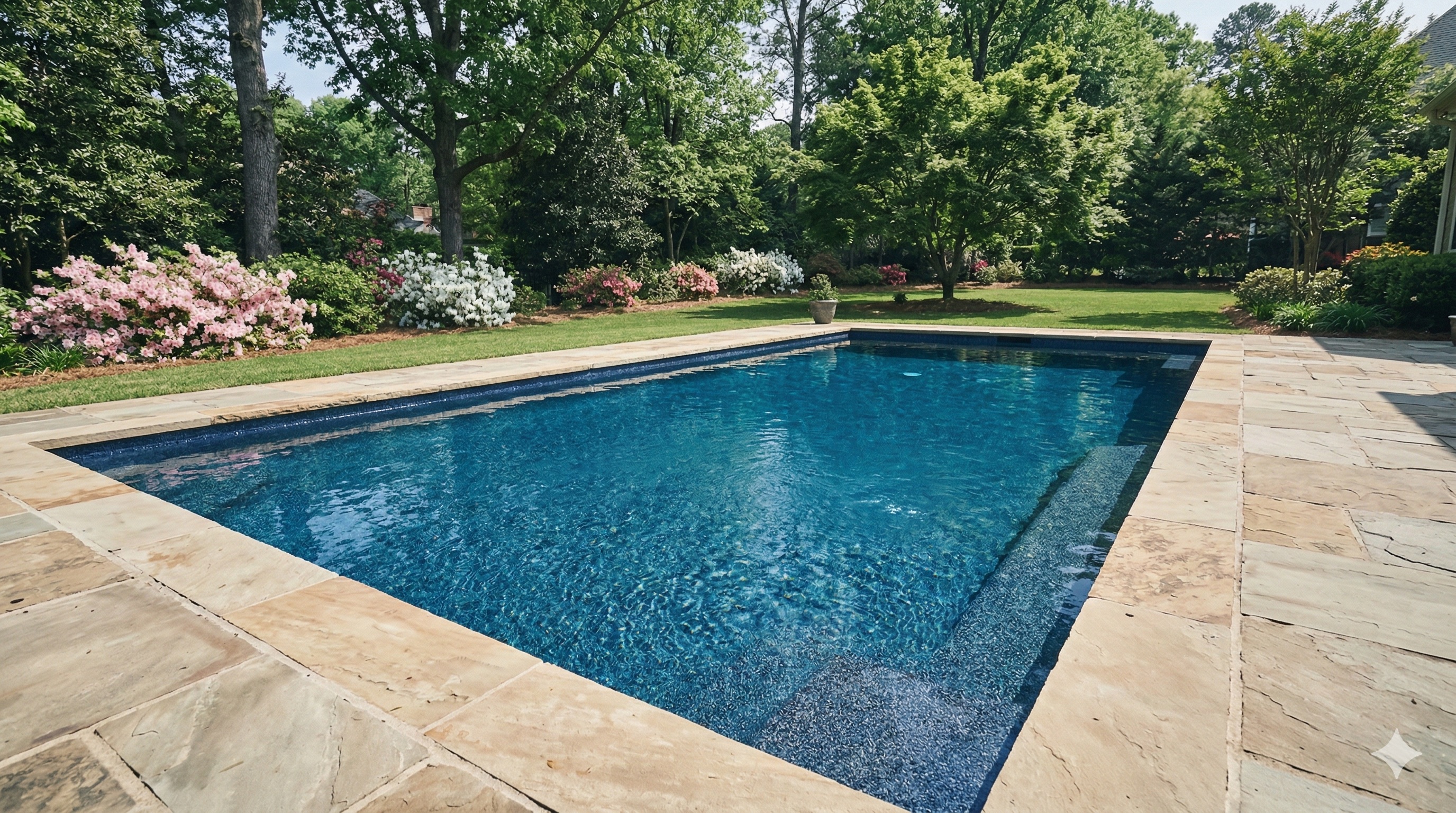
Choose travertine if: You prioritize the cool-underfoot feel, you want a natural stone aesthetic that complements your pool finish and coping, and you're willing to seal it every few years. Travertine is the dominant choice in neighborhoods like East Cobb and Johns Creek where the outdoor living aesthetic tends toward natural materials.
Choose pavers if: Budget is a primary factor, you want a specific pattern or design, or you prefer a lower-maintenance surface. Pavers are a great choice and won't let you down — just opt for the lightest color available to minimize heat.
One more option: Some homeowners combine both — travertine immediately around the pool and coping, with pavers extending out to the broader patio area. This puts the cool natural stone where bare feet spend the most time and uses the more budget-friendly material for the larger surface area.
A Side-by-Side Example
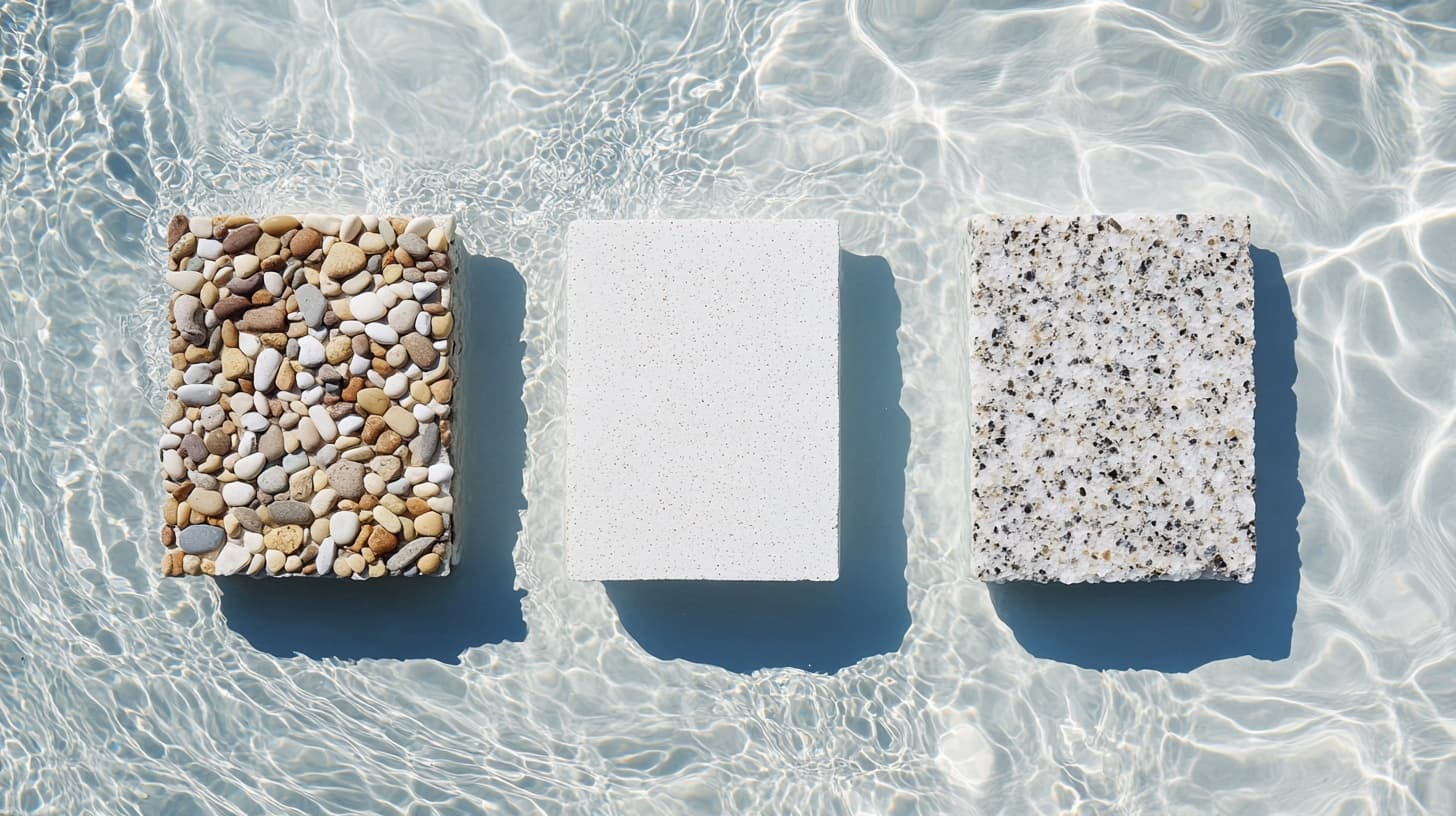
A homeowner in East Cobb was torn between the two options for a 600-square-foot deck replacement. After seeing travertine and paver samples side by side in their backyard — next to the existing coping and the Midnight Blue pebble finish they'd chosen — they walked on both barefoot on a hot afternoon. The travertine was noticeably cooler. They ended up choosing a French-pattern tumbled travertine for the area immediately around the pool (about 350 square feet) and matched it with light-colored Belgard pavers for the extended patio section. Total cost came in around $14,500 — splitting the difference between an all-travertine and all-paver deck while putting the natural stone where bare feet spend the most time.
According to the Brick Industry Association, both interlocking pavers and natural stone pool decks have an expected service life of 25 to 50 years when properly installed with adequate base preparation — the material choice is more about feel and aesthetics than longevity.
See Both Materials Before You Decide
The best way to choose is to see and feel both materials in person. We bring samples to your home so you can see them next to your pool, your coping, and your house exterior — or we'll take you to the material yard to see full displays.
We install both travertine and pavers across Metro Atlanta. The right choice depends on your pool, your budget, and how you use your outdoor space.
Call or use the contact form to set up a time.
Ready to Talk About Your Pool?
Get a free, no-obligation consultation from Cornerstone Pool & Remodel.
Request a Free Quote