Peachtree Corners has quietly become one of the most active pool renovation markets in Metro Atlanta. The neighborhood hit its building stride in the early 2000s, which means a large concentration of pools that are now 15 to 22 years old — right in the sweet spot where surfaces are failing, equipment is aging, and homeowners are ready to reimagine their backyard.
Here's what Peachtree Corners homeowners are actually choosing when they renovate — not generic trends from a national magazine, but the upgrades we're seeing on real projects in the 30092 and 30071 zip codes.
The Baseline: What Most Projects Start With
Almost every renovation in Peachtree Corners starts with resurfacing. The original plaster surface is the first thing to fail, and it's the foundation everything else builds on.
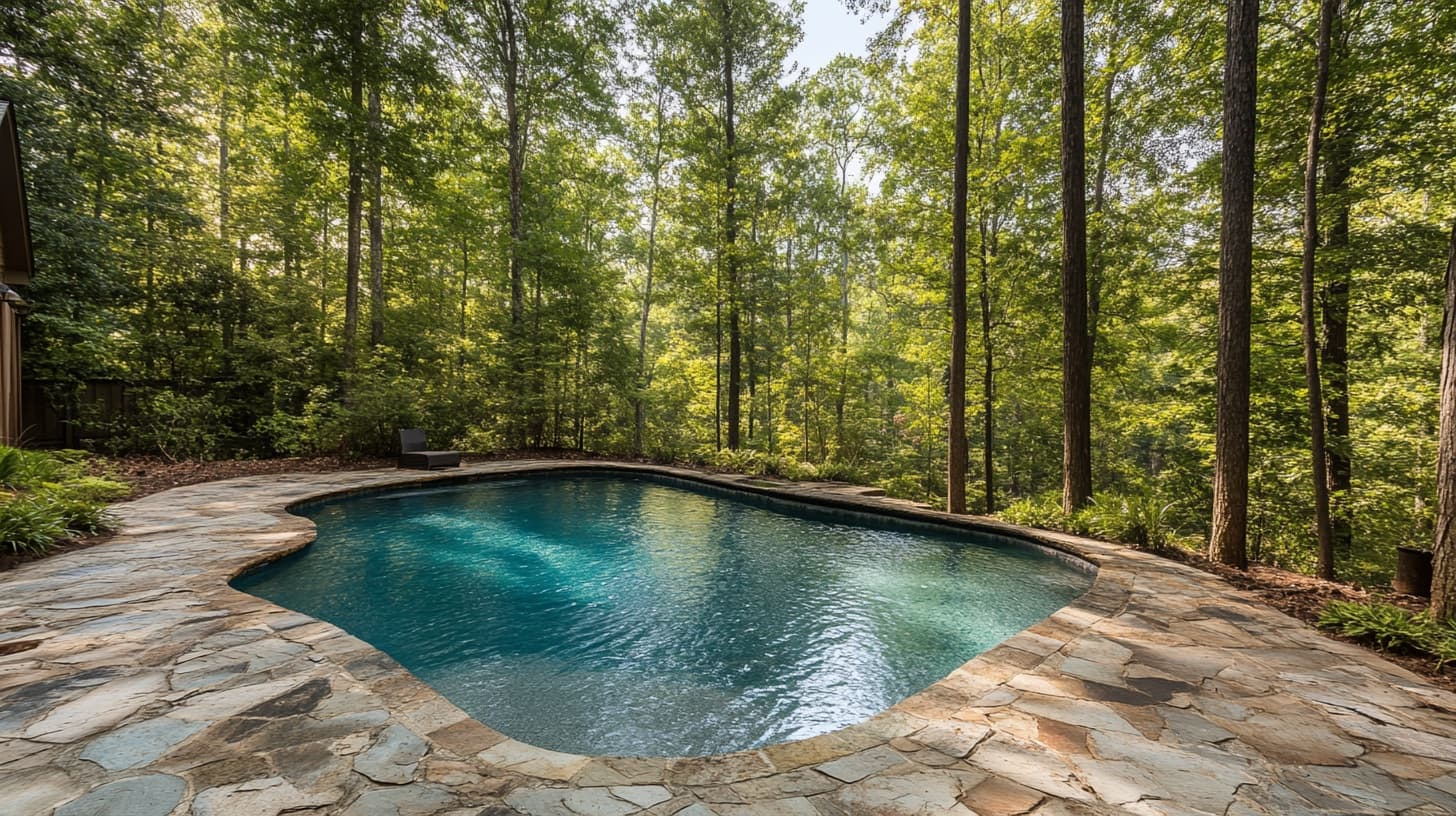
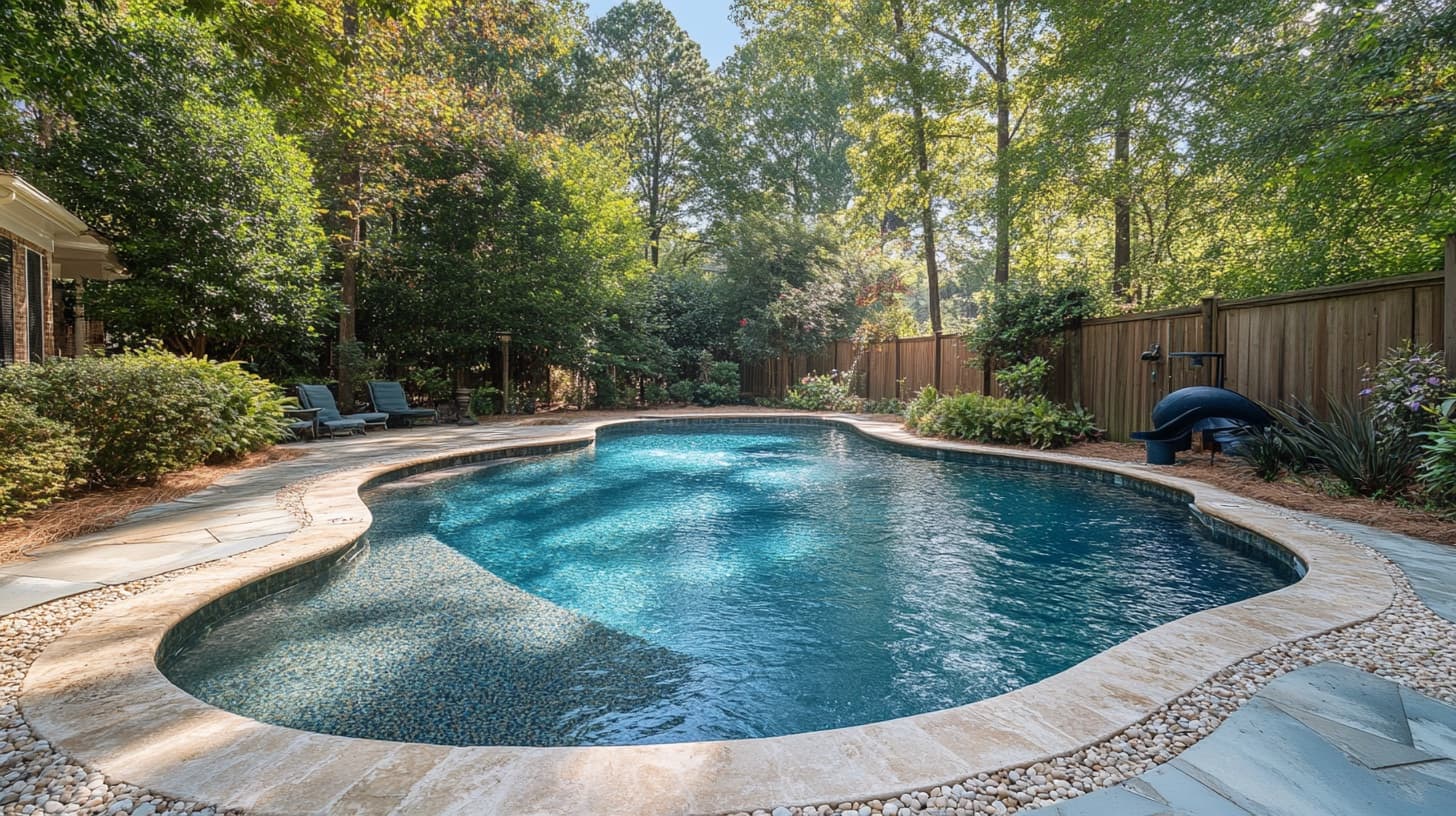
The dominant choice: StoneScapes pebble finish. Roughly 70% of Peachtree Corners homeowners we work with choose a pebble finish over replastering with standard plaster. The math is straightforward — pebble costs 50 to 70 percent more upfront but lasts twice as long. For homeowners who plan to stay in their home, the longer lifespan makes pebble the better value.
The most popular StoneScapes blends in the area: Aqua Blue (a medium blue that creates classic pool water color) and Mini Pebble Tropics (a blue-green blend that creates a more natural lagoon look). Darker tones like Midnight Blue are gaining ground with homeowners going for a more dramatic aesthetic.
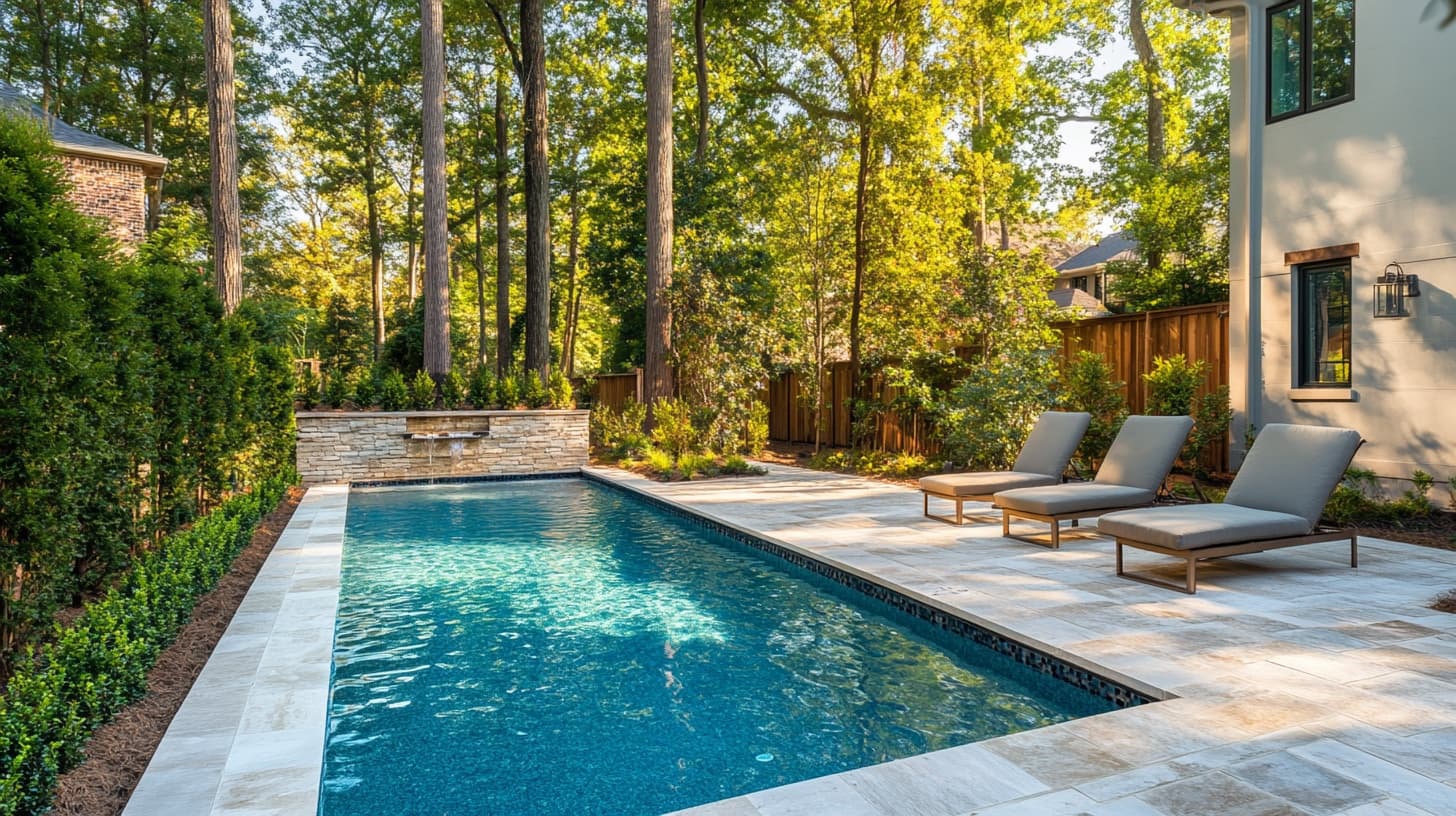
Coping replacement accompanies the resurfacing in about 80% of projects. The original poured concrete or precast coping is typically cracked, stained, or just dated. Travertine and natural stone coping are the standard upgrade — they look better, last longer, and integrate with modern deck materials.
Upgrade #1: LED Lighting Conversion
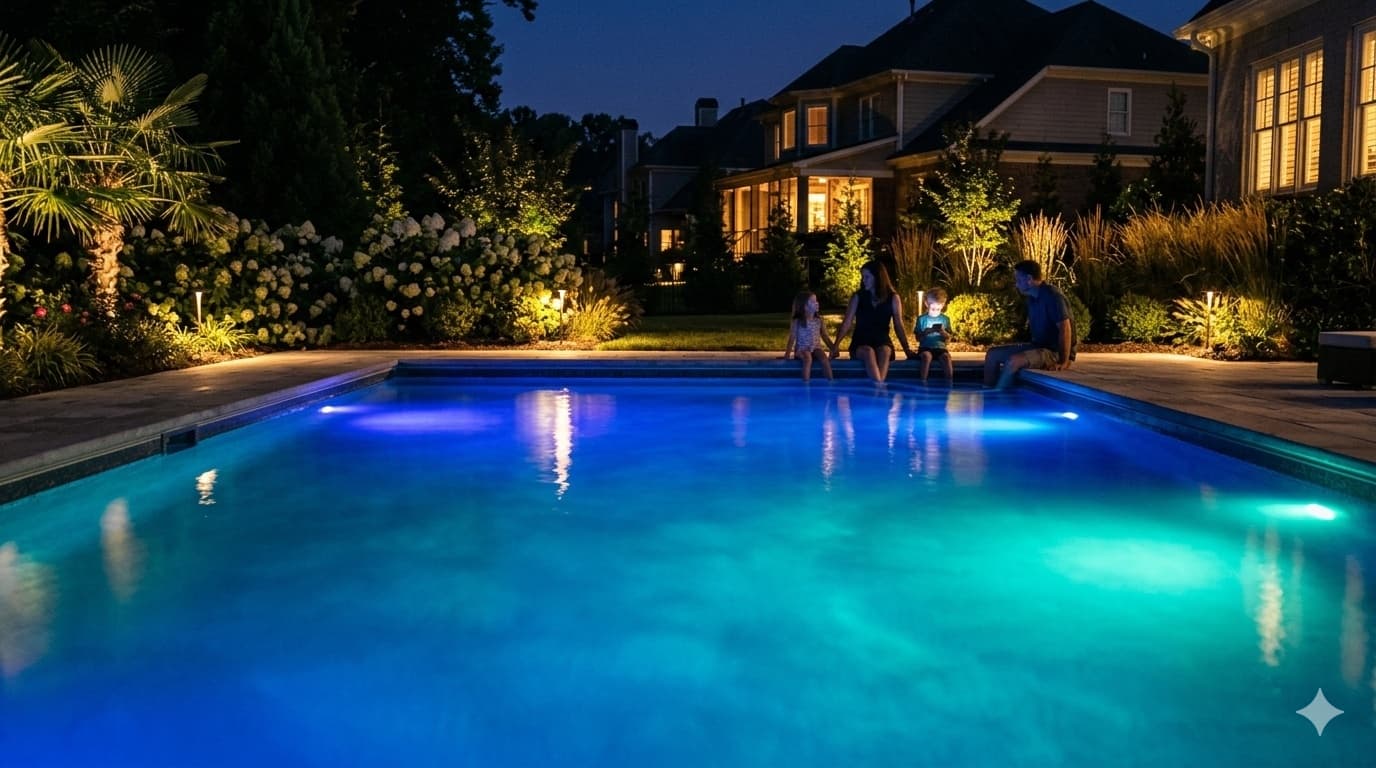
This might be the highest-impact, lowest-cost upgrade available, and Peachtree Corners homeowners have caught on. Converting from the old incandescent pool light to LED — or adding LED lights where the pool only had one or two fixtures — completely transforms the pool at night.
What it costs: $800 to $2,500 depending on the number of fixtures and whether new niches need to be cut into the pool wall.
Why it's trending: LED pool lights offer color-changing capability, dramatically lower energy consumption, and bulb life measured in decades rather than years. A single color-changing LED light turns a dark pool into a backyard focal point at night. Multiple lights with color zones create a resort-like atmosphere.
The practical benefit: Many Peachtree Corners families use their pools most in the evening — after work, after kids' activities, during weekend gatherings. Better lighting extends the usable hours of the pool significantly.
Upgrade #2: Salt System Conversion
Converting from a traditional chlorine pool to a salt chlorine generator is the second most popular upgrade we see in Peachtree Corners.
What it costs: $1,500 to $3,000 for the salt cell, controller, and installation, plus $50 to $100 for the initial salt.
Why it's trending: Salt systems generate chlorine from dissolved salt, which means you're not handling or storing chlorine chemicals. The water feels softer on skin and eyes. And the ongoing chemical costs are lower — salt is cheap and lasts a long time, while chlorine tabs and liquid are a recurring expense.
What to understand: Salt isn't chlorine-free — the system generates chlorine from the salt. And salt can be harder on certain pool finishes and equipment over time if the chemistry isn't maintained. Pebble and quartz finishes handle salt systems better than standard plaster, which is another reason pebble is the preferred finish for homeowners making the switch.
The renovation connection: If you're already resurfacing and upgrading equipment, adding a salt system during the renovation is the ideal time. The pool is drained, the equipment pad is being worked on, and the new surface is salt-compatible from day one.
Upgrade #3: Tanning Ledge or Bench Addition
Structural modifications are a bigger investment, but tanning ledges and built-in benches are the structural upgrade with the most traction in Peachtree Corners.
What it costs: $3,000 to $6,000 for a built-in bench. $8,000 to $18,000 for a tanning ledge.
Why it's trending: Peachtree Corners has a lot of families with young kids, and tanning ledges create a safe, shallow play area. Built-in benches add in-water seating that adults appreciate, especially in pools that didn't originally have any shallow lounging area.
Design note: The pools in Peachtree Corners are predominantly rectangular or geometric (a product of the era they were built). Adding a tanning ledge to one end softens the geometry and creates visual interest without changing the pool's fundamental shape.
Upgrade #4: Automation Systems
Pool automation — controlling your pump, heater, lights, and water features from your phone — is moving from luxury to expected in Peachtree Corners renovations.
What it costs: $2,000 to $4,500 for a full automation system like Pentair IntelliCenter or Jandy iAqualink, including installation.
Why it's trending: Convenience. Turning on the spa from the couch, scheduling pump run times for off-peak electricity rates, and adjusting the heater before you get home are features homeowners use daily once they have them. The technology has matured to the point where setup is straightforward and reliability is high.
The best time to add it: During a renovation when equipment is being replaced or updated. Retrofitting automation into existing equipment is possible but more expensive and sometimes requires equipment compatibility upgrades.
Upgrade #5: Modern Waterline Tile
The original waterline tile in most Peachtree Corners pools is a basic 2x2 ceramic in a single color — functional but uninspiring. Replacing it with glass tile is one of the most visible aesthetic upgrades available.
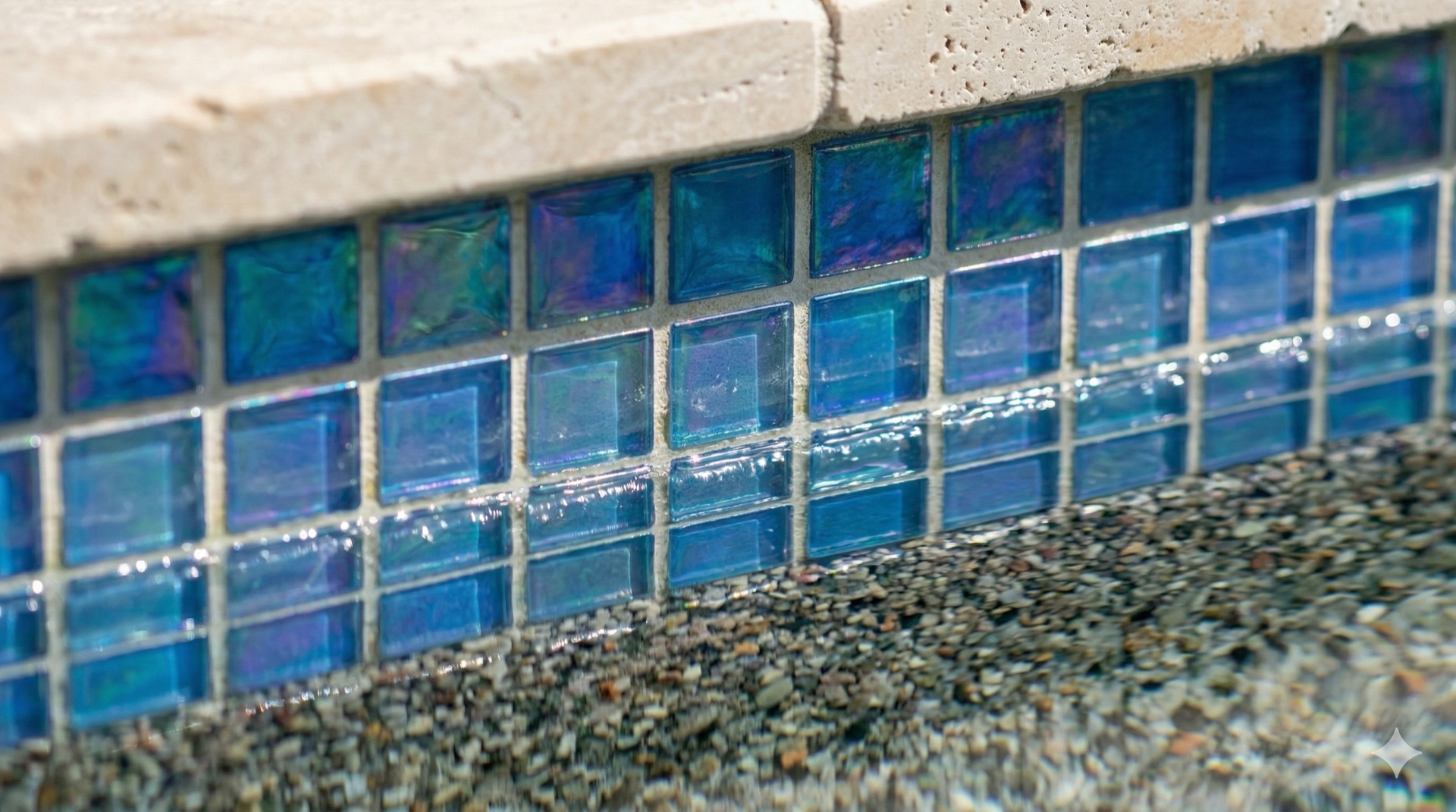
What it costs: $1,500 to $5,000 depending on material (ceramic replacement is the low end; glass mosaic is the high end).
Why it's trending: Tile is the most visible decorative element of the pool, and glass tile specifically creates a luminous, dynamic waterline that ceramic can't match. Homeowners who are already investing in new coping and a pebble finish want the tile to match the upgraded aesthetic.
Popular choices in the area: Iridescent blue glass blends, blue-green glass mosaics, and mixed-material bands (glass accent row with porcelain backing) are the most requested. Our formal training under Italian tile artisans means the installation quality matches the material quality.
Upgrade #6: Variable-Speed Pump
This one's less glamorous but arguably the smartest investment on the list.
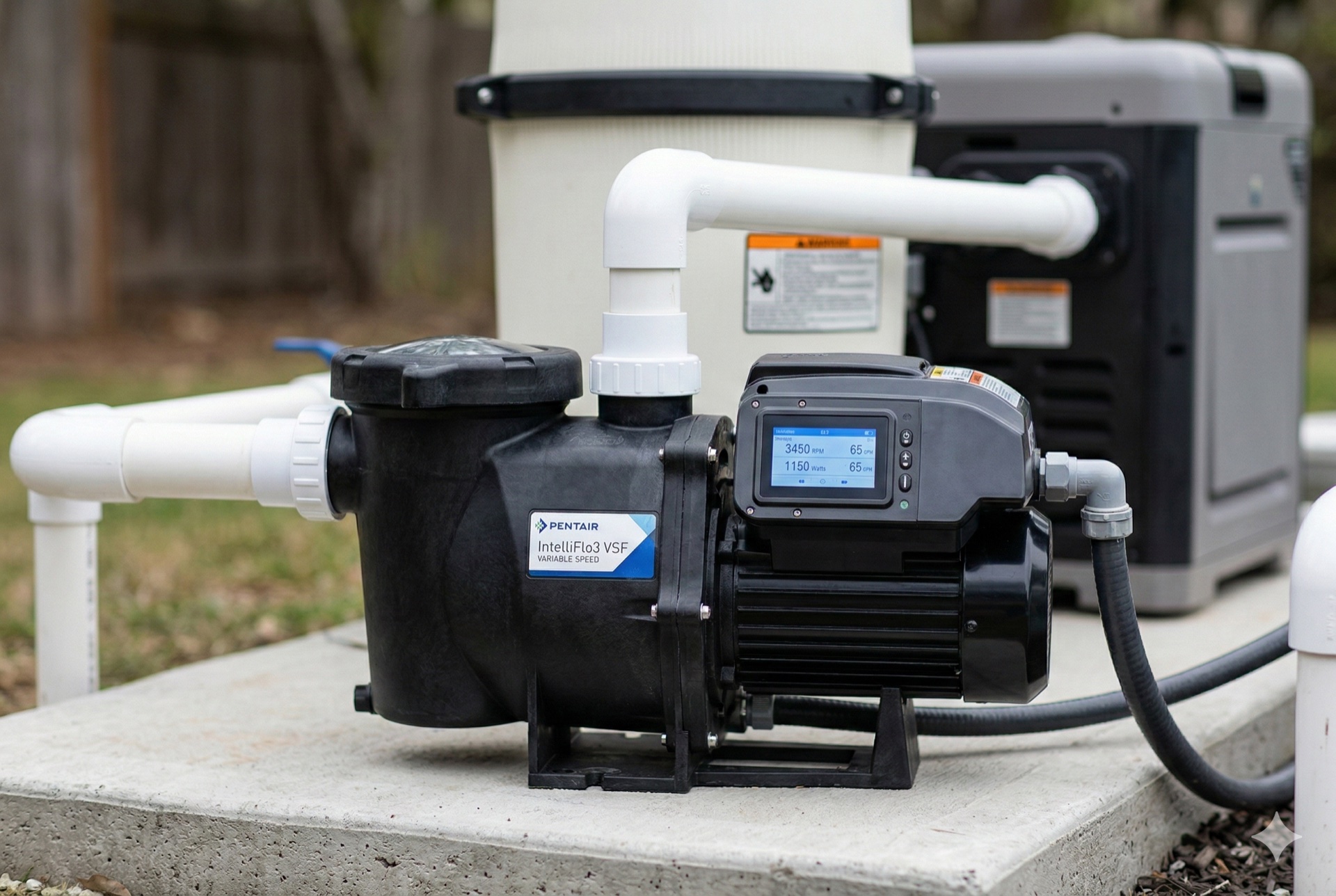
What it costs: $1,500 to $2,800 installed.
Why it matters: A variable-speed pump uses 60 to 80 percent less electricity than the single-speed pump that's probably running your pool right now. On a typical Metro Atlanta pool, that's $50 to $100 per month in energy savings. The pump pays for itself in 18 to 30 months.
The regulatory angle: Georgia follows the DOE's updated pump efficiency standards, and single-speed pumps above 1 HP are being phased out of the market. If your current pump fails, you'll likely need to replace it with a variable-speed unit anyway.
How Peachtree Corners Compares
Peachtree Corners renovation projects tend to be comprehensive — homeowners here rarely do just a resurface. The typical project bundles 2 to 4 upgrades together, which makes financial sense: one pool-down period, one mobilization, and a cohesive result.
Compared to other Metro Atlanta areas, Peachtree Corners leans more toward technology upgrades (automation, LED, salt systems) than purely aesthetic ones. It's a practical-minded community that values function alongside form.
A Peachtree Corners Renovation: Five Upgrades, One Project
A homeowner off Spalding Drive had a 2004 rectangular pool — original plaster surface (rough and stained), original single-speed pump, incandescent light, and basic ceramic waterline tile. They wanted to modernize without over-spending.
The scope: StoneScapes Mini Pebble in Aqua Blue, tumbled travertine coping, iridescent glass waterline tile, a variable-speed pump, and LED color-changing lights. They also added a salt chlorine generator since the new pebble finish would handle salt well. Total project cost: $19,800. The variable-speed pump alone saves them roughly $70 per month on electricity — it'll pay for itself in about two years. And because everything was done during one pool-down period, they avoided the cost of multiple mobilizations.
The U.S. Department of Energy estimates that variable-speed pool pumps can reduce pumping energy costs by up to 80% compared to single-speed models — making them one of the highest-ROI upgrades available during a pool renovation.
Ready to Plan Yours?
If your Peachtree Corners pool is approaching its 15th or 20th birthday, the first step is a walk-through. We'll assess your pool and equipment, and help you sort the must-do upgrades from the nice-to-haves that can wait.
Call or use the contact form to schedule a free consultation.
Ready to Talk About Your Pool?
Get a free, no-obligation consultation from Cornerstone Pool & Remodel.
Request a Free Quote