You've decided to resurface your pool. Now comes the practical question: how long will this take? And more specifically — how long will your pool be out of commission?
Here's a realistic timeline based on hundreds of resurfacing projects we've completed across Metro Atlanta. No best-case-scenario fluff. Just what actually happens, step by step.
The Short Answer
For a straightforward resurfacing job — drain, prep, apply new finish, fill, and balance — expect 10 to 14 days from the day we drain the pool to the day you can swim.
If you're combining resurfacing with coping and tile replacement, that extends to 2 to 4 weeks.
A full renovation including deck work and structural modifications can run 4 to 8 weeks.
Now let us break down what happens during each phase so you know what to expect.
Phase 1: Drain and Prep (Days 1–3)
The pool is drained, which takes 8 to 12 hours depending on pool size and the pump we use. Once empty, the existing surface is prepped for the new finish.
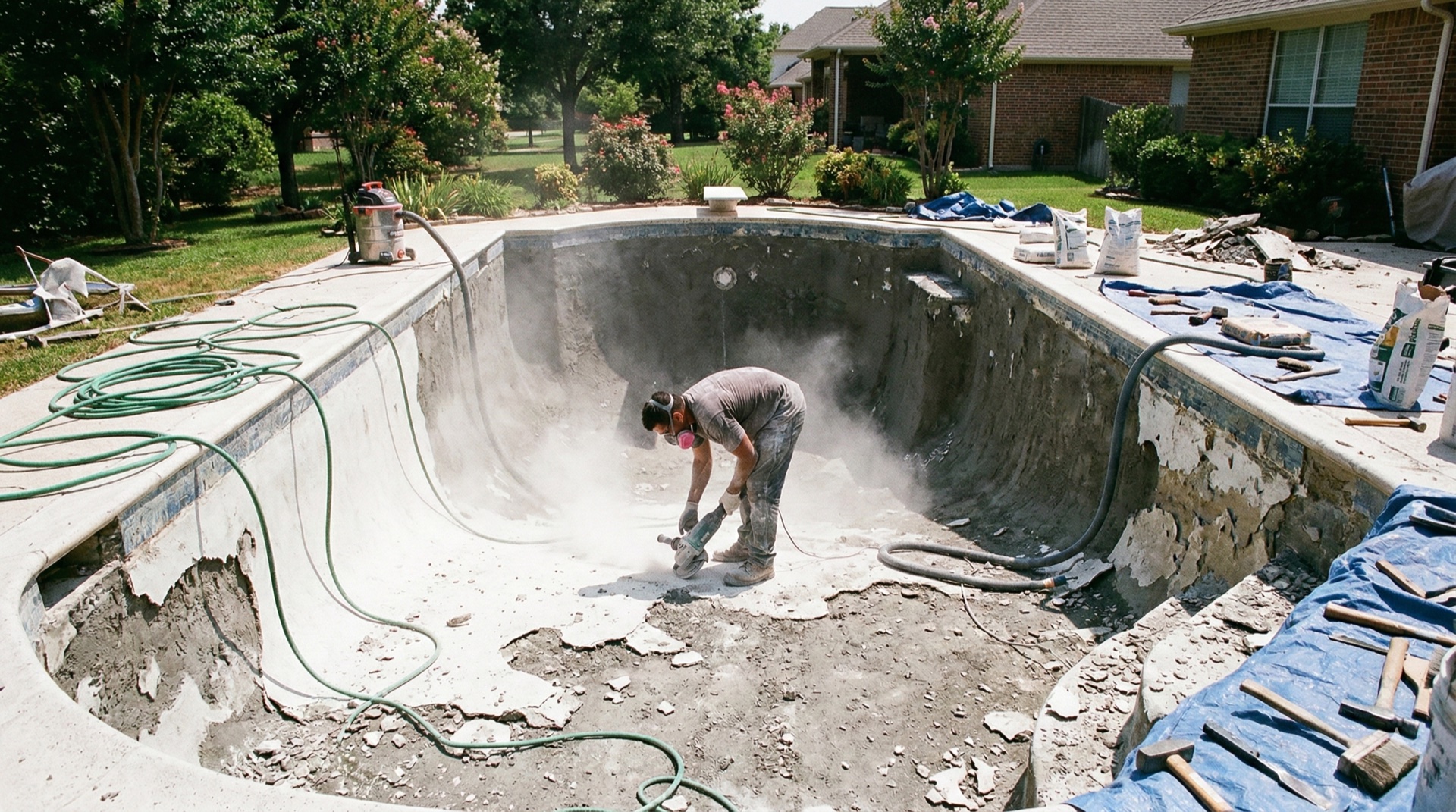
What "prep" means depends on the current condition:
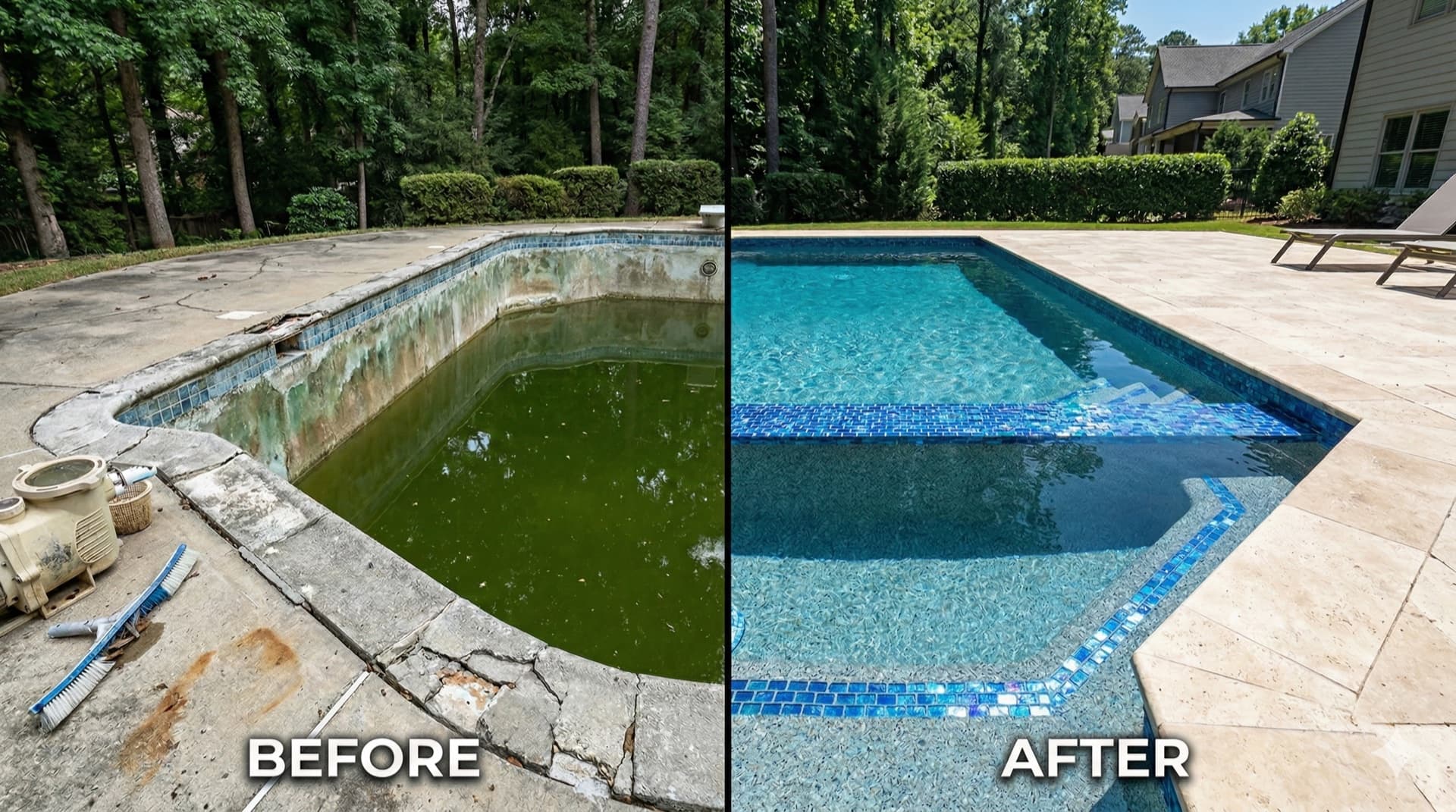
If the existing surface is in reasonable shape — worn but still bonded — We apply a bond coat that helps the new finish adhere to the existing surface. This is the faster scenario: 1 to 2 days of prep.
If the existing surface is delaminating, heavily cracked, or has been resurfaced before, we may need to chip (mechanically remove) portions of the old finish down to the pool shell. This is more labor-intensive: 2 to 3 days depending on the extent.
Any tile and coping work starts during or immediately after the prep phase. Old waterline tile is removed, the substrate is prepared, and new tile installation begins.
Phase 2: Tile and Coping (Days 3–7, If Applicable)
If you're replacing the waterline tile and coping, this work happens while the pool is empty and prepped.
Tile installation takes 1 to 3 days depending on the complexity — a simple single-row ceramic band is faster than a multi-row glass mosaic.
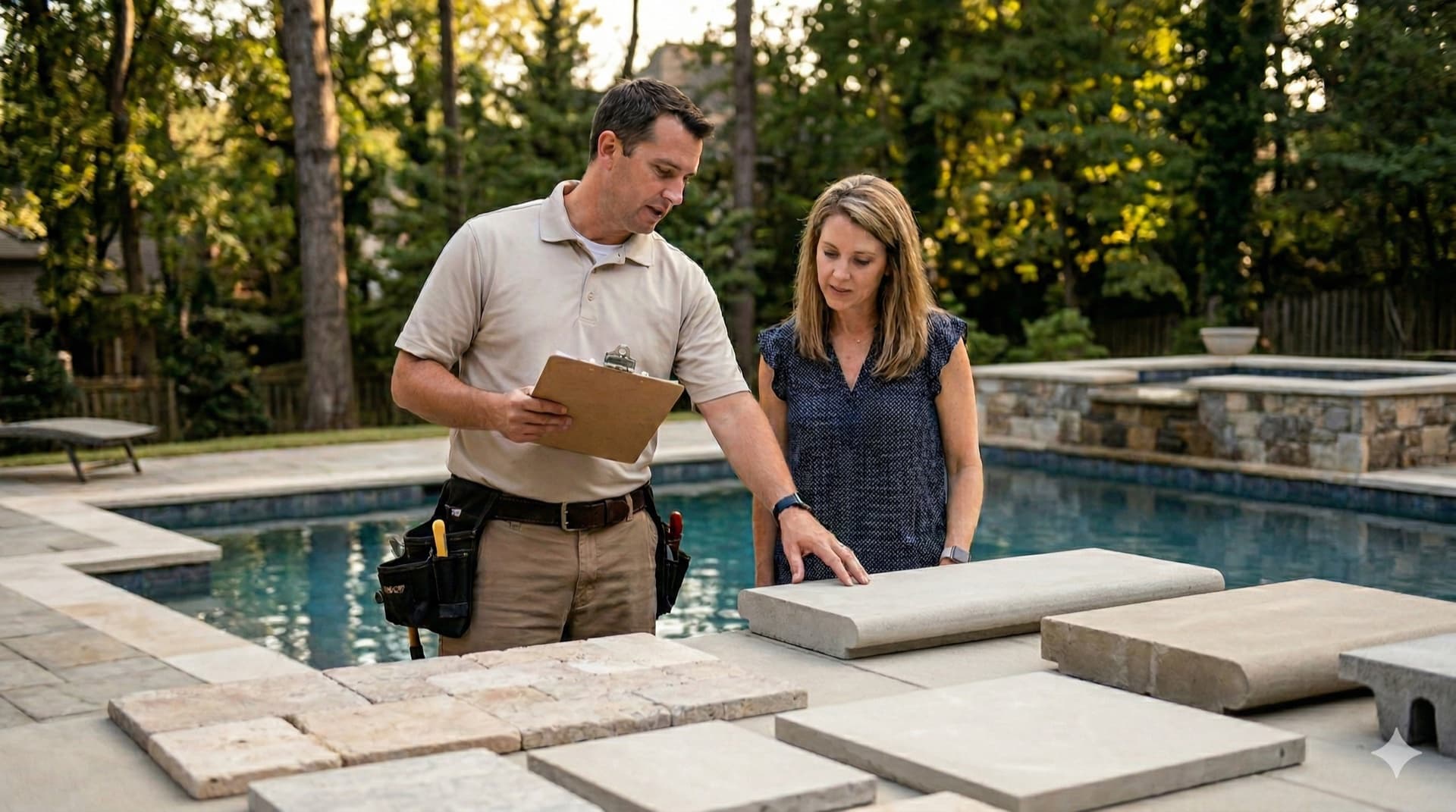
Coping replacement runs 2 to 4 days. The old coping is removed, the bond beam is repaired if needed, and new coping stone (travertine, natural stone, or brick) is set and grouted.
Tile and coping work overlaps with other phases — while one section of coping is setting, the crew can be prepping the pool surface in another area. An experienced crew manages this efficiently. A crew that doesn't do this regularly loses days to poor sequencing.
This is where having one crew handle the entire project matters. Our team does the prep, tile, coping, and finish application — there's no waiting for one subcontractor to finish before the next one shows up. No scheduling gaps between trades.
Phase 3: Surface Application (Day 1 of Finish Work)
This is the main event. The new pool finish — plaster, pebble (StoneScapes), or quartz — is applied in a single day.
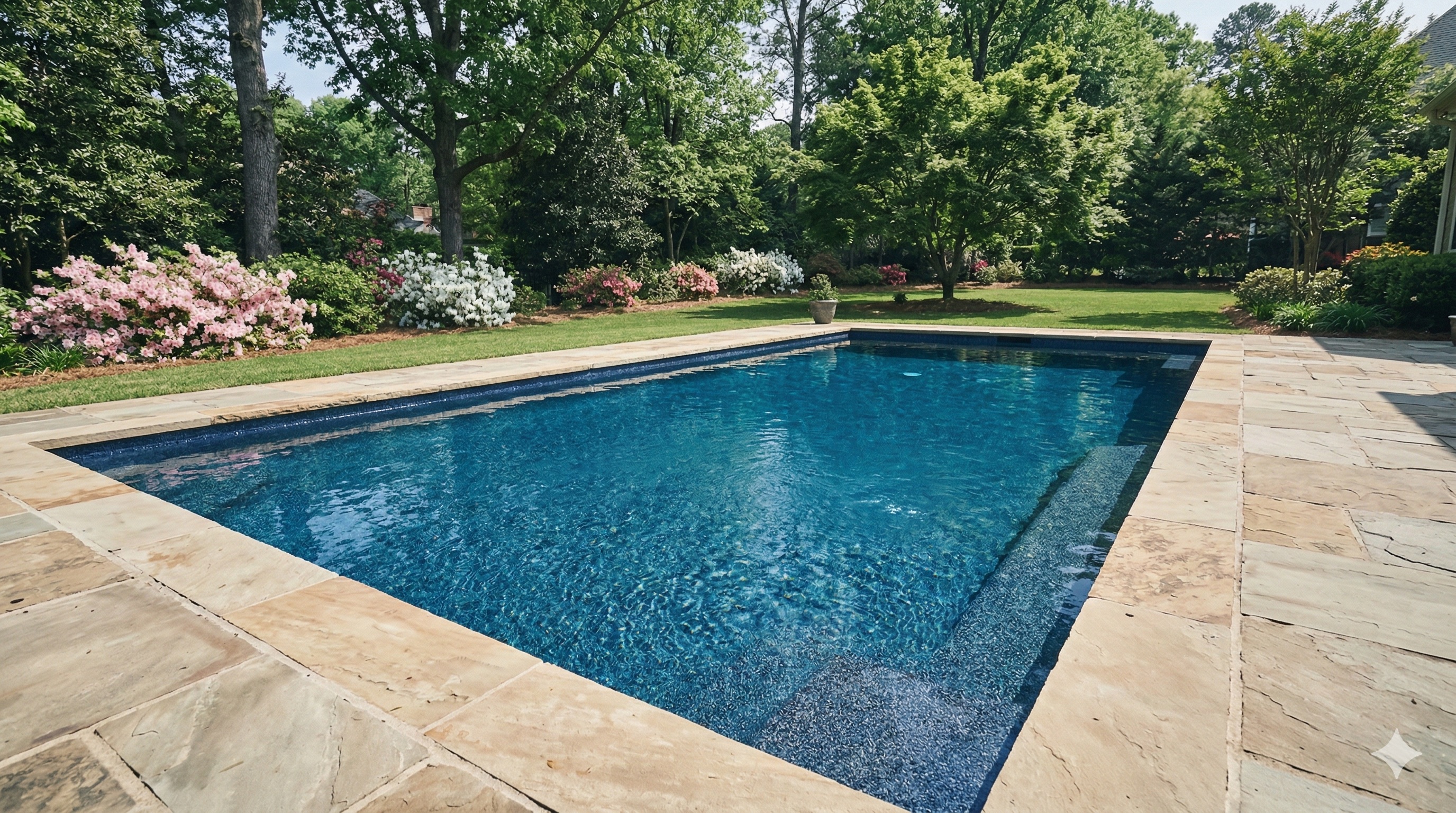
Yes, one day. The actual surface application is a continuous process that starts early in the morning and finishes by afternoon. The crew works around the pool in sections, applying the material by hand and working it to the correct thickness and texture.
For pebble finishes, the surface is then washed (or "exposed") later the same day or the following morning. This is the step where excess cement is washed away to reveal the natural pebbles. The timing and technique of this step are critical — too early and the pebbles dislodge, too late and the cement sets too hard. This is the phase where experience matters most.
Weather matters on application day. The ideal conditions are above 50°F with no rain expected for 24 hours. In Metro Atlanta, this is achievable almost year-round except during occasional cold snaps in January and February. We monitor the forecast and schedule the application day for optimal conditions.
Phase 4: Cure and Fill (Days 2–7 After Application)
After the surface is applied, it needs time to cure properly before the pool is filled.
Plaster and quartz finishes are typically filled within 24 to 48 hours of application. The fill process is managed carefully — We fill slowly and continuously to avoid dry lines (marks on the surface caused by stopping the fill partway).
Pebble finishes may need an additional acid wash before filling, depending on the specific product and application. This adds a day.
Filling the pool takes 12 to 24 hours depending on pool size and your water source. We coordinate this to run overnight and into the following day.
Phase 5: Startup and Chemistry (Days 1–5 After Fill)
This is the phase homeowners are most impatient about — the pool is full, it looks beautiful, and you want to jump in.
Not yet.
A new pool surface — especially pebble and plaster — goes through a curing process for the first 30 days after filling. The most critical period is the first week:
Days 1–3: Water chemistry is tested and adjusted daily. The new surface releases calcium and other minerals that change the water chemistry rapidly. pH, alkalinity, and calcium hardness need to be balanced and maintained within a specific range to protect the new finish.
Days 3–7: Chemistry stabilizes. Brushing the pool surface daily during this period helps the curing process and prevents staining.
When can you swim? Most finishes are safe to swim in 5 to 7 days after filling, once the chemistry is balanced and the surface has had its initial cure. We'll tell you the exact day based on the water test results.
What Can Delay the Timeline
Weather. Rain delays surface application. Sustained cold (below 40°F) pauses finish work. In Metro Atlanta, weather delays are rare but possible, especially in late fall and winter. A typical delay is 1 to 3 days while waiting for conditions to improve.
Surface condition surprises. Occasionally, draining a pool reveals issues that weren't visible with water in it — cracks in the shell, damaged plumbing fittings, or more extensive delamination than expected. These are addressed before the new surface goes on, which may add 1 to 2 days.
Material delivery. Most materials are in stock locally, but specialty tile, specific StoneScapes blends, or custom coping sometimes need to be ordered. We identify lead times during the planning phase so this doesn't become a mid-project delay.
Equipment issues. If your pump, filter, or other equipment needs replacement, addressing it during the resurfacing is efficient — but it adds to the timeline. We flag equipment concerns during the consultation so you can decide before work begins.
How to Minimize Your Pool's Downtime
A few practical tips:
Schedule during off-season. Fall and winter resurfacing means you're not losing swimming time, and contractor scheduling is more flexible.
Make decisions early. The single biggest cause of project delays is waiting on material decisions. If you've selected your finish, tile, and coping before the crew starts, the work proceeds without stops.
Bundle work. If you need resurfacing, coping, and tile, do them together. Three separate projects mean three drainings, three mobilizations, and three cure periods. One combined project is faster and cheaper.
Work with a single crew. Companies that subcontract trade by trade lose days to scheduling gaps between subs. Our crew handles the full scope in-house, so phase transitions happen the next morning — not the next week.
What a Real Timeline Looked Like
A homeowner in Johns Creek had a 2007 pool that needed resurfacing (StoneScapes Aqua Blue), new travertine coping, and a glass mosaic waterline tile upgrade. The project started on a Monday with draining and prep. By Wednesday, the old tile was out and coping removal was underway. New coping was set Thursday through the following Monday, and tile went in alongside. The pebble finish was applied the following Wednesday — one continuous day of work starting at 6 AM. Filling started Thursday evening and ran through Friday. After five days of chemistry management, they were swimming the following Wednesday. Total elapsed time from drain to swim: 17 days. No weather delays, no material holdups, no gaps between trades.
The National Plasterers Council recommends a minimum 28-day initial cure period for new pool finishes, during which water chemistry must be monitored closely and the surface brushed regularly — the first week is the most critical window for long-term finish durability.
Get a Timeline for Your Pool
Every pool is different. We'll look at yours, discuss the scope, and give you a day-by-day timeline for your specific project — no vague "4 to 6 weeks" range, but the actual sequence of what happens and when.
Call or use the contact form to schedule a visit.
Ready to Talk About Your Pool?
Get a free, no-obligation consultation from Cornerstone Pool & Remodel.
Request a Free Quote